
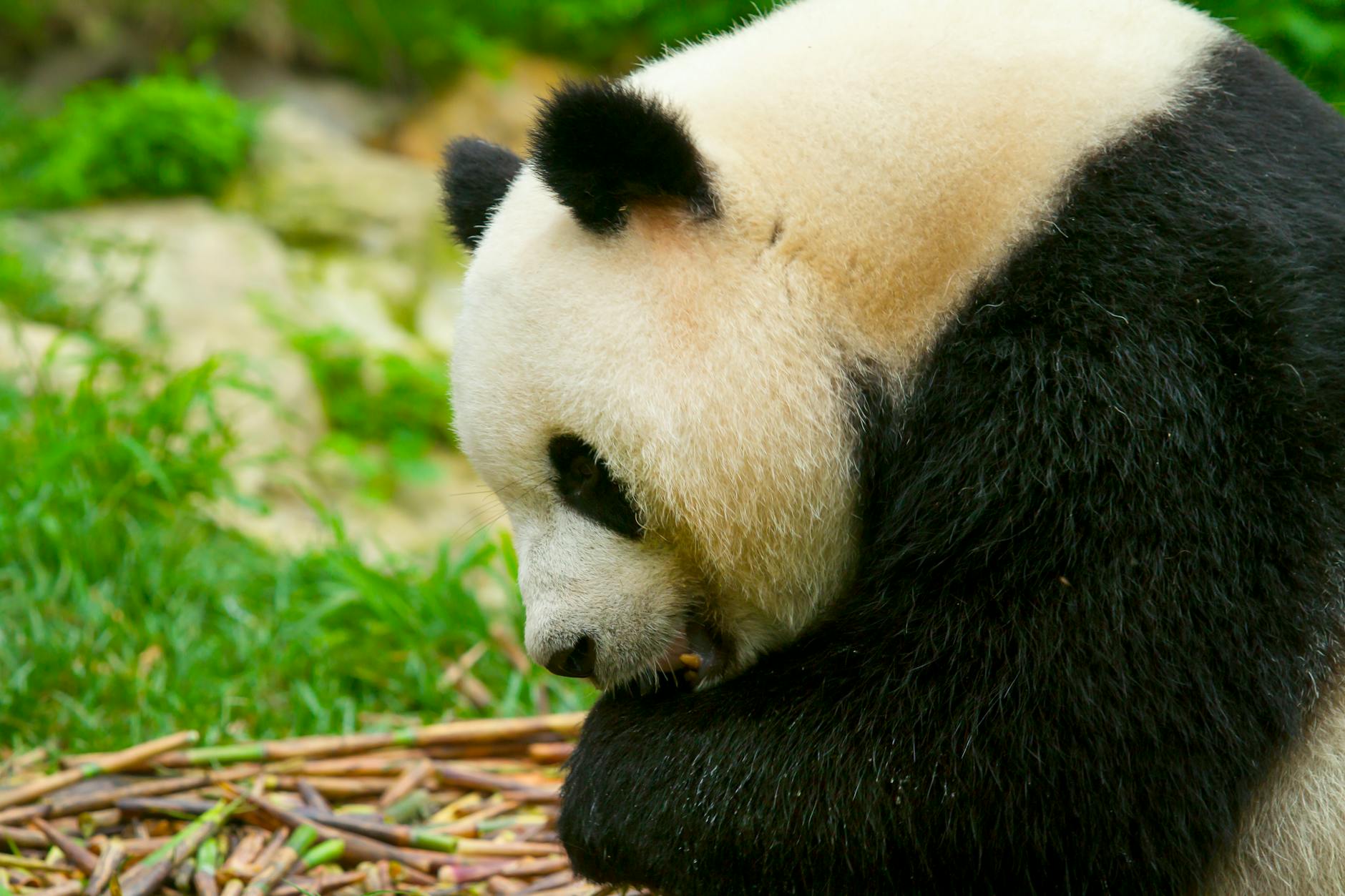
Bing Dwen Dwen Plush Panda for Olympics
Last updated: November 5, 2026
5 min read
At the Beijing 2022 Winter Olympics, medal winners did not first receive their medals. They received a Bing Dwen Dwen plush panda instead, handed over at the venue straight after the competition, with the medals awarded later at a separate ceremony. That plush toy became one of the most sought-after objects of the games, selling out across Beijing and the rest of China and triggering hours-long queues outside shops in sub-zero weather.
The giant panda
Since the giant panda is widely treated as a Chinese national treasure, it makes sense that a panda would be chosen as the games mascot. China has used the species as a diplomatic instrument for decades, lending pairs to zoos abroad to build trade ties and goodwill. Bing Dwen Dwen carried that tradition into a sporting event watched by billions.
Who designed Bing Dwen Dwen
The mascot came from a team of 14 teachers and students at the Guangzhou Academy of Fine Arts, led by Professor Cao Xue. The team did not set out to make a panda. Cao Xue has said the group set the panda idea aside at one point, worried it was too obvious a choice for China. The selection process was large: organisers received 5,816 design submissions from 35 countries and regions before settling on the panda in its glassy ice shell. The mascot was unveiled on 17 September 2019, more than two years before the games opened.
What the name and design actually mean
Bing Dwen Dwen is presented to Olympic winners in a clear shell meant to represent ice, finished with a gold laurel wreath. To me it looks like an adorable astronaut, and that is not far off the design intent. The full-body shell was created so the panda could plausibly skate, snowboard and ski alongside the athletes, and it doubles as a nod to future technology.
- Bing means ice. It stands for purity and strength, both fitting for a Winter Olympics.
- Dwen Dwen suggests health, liveliness and a childlike cuteness, matching the round shape of a panda.
- The bright colour halo around the face was drawn from the ice ribbon on the exterior of the National Speed Skating Oval, the venue built for the games.
- The red heart on the left paw is a welcome to visitors from around the world.
There is also a hidden reference. The shell is partly inspired by tanghulu, the candied-fruit skewers sold on Chinese streets in winter, which are coated in a hard, shiny sugar glaze. That glassy coating is what the panda’s ice shell evokes.
The plush toy frenzy
The plush version of Bing Dwen Dwen became almost impossible to buy during the games. Demand outstripped supply because only a limited number of licensed factories were authorised to produce official merchandise, and many of those factory workers were on holiday for the Chinese New Year, which fell on 1 February 2022, right as the games began. Shops in Beijing capped how many each customer could buy, and people still queued for hours in freezing temperatures hoping to take one home.
That scarcity pushed prices up on resale sites and pulled in a wave of counterfeits. Chinese authorities cracked down on fakes during the games, fining sellers and seizing unlicensed merchandise. If you wanted a genuine one, patience was the only real option.
The mascot with the wrong voice
Bing Dwen Dwen built a genuine fanbase, helped by clips of the costumed mascot dancing and waving at venues. Then, on 8 February 2022, a state broadcaster CCTV segment showed the mascot interviewing freeskier Yang Shuorui, and it spoke: a deep male voice with a northeastern Chinese accent, before the performer pulled off the head on camera. Chinese social media turned on it within hours. As several viewers pointed out afterwards, IOC guidance keeps Olympic mascots silent for exactly this reason, and Bing Dwen Dwen was better off dancing and waving, which is what made it a hit in the first place.
Why a panda mascot worked so well
Bing Dwen Dwen was not the first panda mascot at a major games. Pan Pan, mascot of the 1990 Beijing Asian Games, was modelled on a real giant panda, Basi, and was the first panda used as a mascot at an international sporting event. Jingjing, one of the five Fuwa mascots of the 2008 Beijing Summer Olympics, was the first at an Olympics. The panda keeps being chosen because it instantly reads as Chinese, it is widely seen as gentle and lovable, and it carries no political baggage on the world stage. For a country that has spent decades using real pandas to build relationships abroad, putting one in an ice suit for the Winter Games was a natural move.
A companion mascot you may have missed
Bing Dwen Dwen had a partner. The 2022 Winter Paralympics, held in the same Beijing venues in March 2022, used a separate mascot called Shuey Rhon Rhon, a glowing red lantern child designed by Jiang Yufan, then an undergraduate at the Jilin Art Institute of Design. Where Bing Dwen Dwen drew on the panda and on winter sport, Shuey Rhon Rhon was based on the traditional Chinese lantern, with Shuey meaning snow and Rhon Rhon suggesting warmth, tolerance and friendship. It never reached the same fame.
If the appeal of pandas as national symbols interests you, the story of panda diplomacy is the bigger picture this little plush toy belongs to.
How the shortage played out
Flagship stores in Beijing posted signs saying they had as few as 300 dolls a day, one per customer. The plush retailed at 192 yuan, about 30 dollars, at the Gongmei Emporium in central Beijing, and was listed on the secondary market at more than 500 dollars. Beijing police issued administrative penalties to three traders reselling at inflated prices. Coverage helped too. On 2 February, two days before the opening ceremony, the Japanese NTV announcer Gido Tsujioka showed off his Bing Dwen Dwen badges on air, and the clip spread on Weibo.
When the Games merchandise ended
Under the licensing contracts, authorisation tags stopped being issued on 1 July 2022, so the Games licences covered production up to 30 June 2022. Shops could sell remaining stock until 30 September 2022 and online sellers until 31 December 2022. Official Bing Dwen Dwen products have continued since, including commemorative and zodiac editions, so check the seller and the licensing marks before you buy.
Frequently asked questions
What is Bing Dwen Dwen?
The giant panda mascot of the 2022 Beijing Winter Olympics, designed as a panda in a translucent ice shell.
Who designed Bing Dwen Dwen?
A 14-person team led by Cao Xue at the Guangzhou Academy of Fine Arts, chosen from 5,816 entries.
Why did it sell out?
Demand peaked during the Games while the factories were on their Lunar New Year shutdown.
What does the name mean?
Bing means ice. Dwen dwen is a children’s term suggesting sturdy and lively.
Sources and further reading
- Olympics.com: the Beijing 2022 mascot
- South China Morning Post: backlash after Bing Dwen Dwen speaks
- NBC News: the plush pandas Olympians receive
This article is part of our panda facts guide, which links every article on panda biology, behaviour and culture.
Updated 14 September 2026: corrected factual details after a full review against primary sources.
Updated 5 November 2026: added the sales, resale and licensing detail from our former mascot article, which now redirects here.




My kid still has the Bing Dwen Dwen plush. The astronaut framing is so on point. Beijing 2022 got the mascot completely right.
The fakes story is the depressing flipside. People queueing for hours for a plush toy says everything about how loaded panda imagery is in Chinese consumer culture.
The voice actor reveal that disappointed fans is the most internet-era version of mascot management ever. Just keep him silent next time.