Yun Chuan and Xin Bao at San Diego, and the Lineage They Are Continuing
Last updated: November 5, 2026
6 min read
When Yun Chuan walked out of his transport crate at San Diego Zoo on 27 June 2024, he was, in a quiet way, finishing a loop.
His grandmother lived in this same zoo for 23 years. His mother was born here. His name carries the “Yun” of Bai Yun, the female who anchored the first San Diego panda programme from 1996 until her return to China in 2019. Five years after that programme closed, a young male descended from it came back to the place his family helped build. He arrived with Xin Bao, a young female from a different bloodline, and together they became the first giant pandas to enter the United States in 21 years.
I want to spend this post on what that actually means, because the news coverage leaned on the spectacle of the flight and the public debut, and underplayed the harder thing underneath: the science, the relationships, and the lineage that made this return possible.
The arrival, and what it took to make it happen
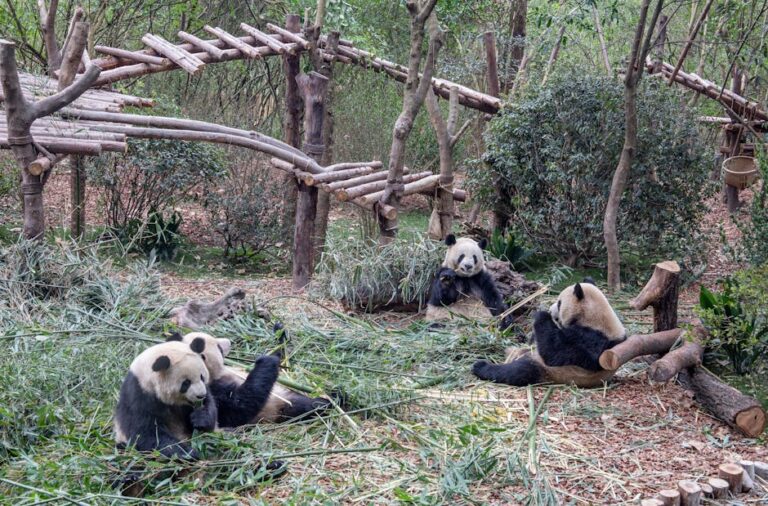
The straightforward facts first. Yun Chuan and Xin Bao landed in California on 27 June 2024 after a chartered flight from Chengdu. They are on a ten-year loan, the standard structure for giant panda agreements between China and partner zoos. They live in the refurbished Panda Ridge habitat at San Diego Zoo, inside Balboa Park. The habitat was rebuilt during the gap years to model the misty, terraced bamboo forests of Sichuan, with climbing structures, cooler microclimates, and separated dens for the pair, because adult giant pandas live solitary lives outside of breeding windows.
The agreement itself was not a foregone conclusion. After Bai Yun and her son Xiao Liwu returned to China in 2019 there was no public timeline for new arrivals. Panda loans slowed across the world, and several Western zoos saw their agreements end without renewal. San Diego Zoo Wildlife Alliance pursued the new partnership directly. A delegation travelled to China and signed a new conservation cooperation agreement with the China Wildlife Conservation Association. That agreement is framed around shared research, not display. The two pandas are here so that the Alliance and Chinese scientists can keep working on the problems the first San Diego programme started to crack open.
Who Yun Chuan is, and the line he descends from
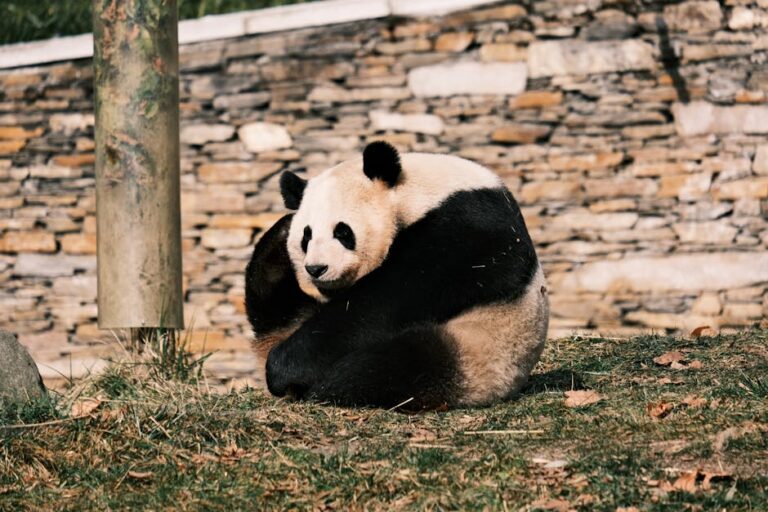
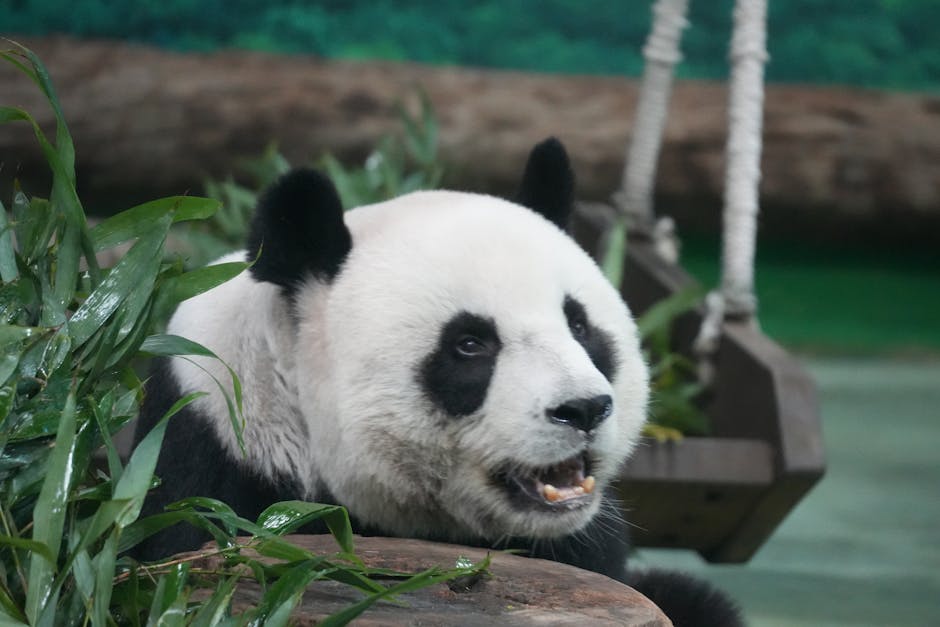
Yun Chuan is the gentle one. Keepers describe him as steady, curious, slower to react, comfortable around people and around the routine of feeding and weighing. He was born in 2019 at the Wolong Shenshuping base in Sichuan, and his pedigree runs back to San Diego in a way that surprises people when they hear it.
His mother is Zhen Zhen, born at San Diego Zoo in 2007 to Bai Yun and Gao Gao. Zhen Zhen went back to China in 2010, as cubs born abroad are required to do, and had cubs of her own there. Yun Chuan is one of them. The “Yun” in his name is a direct nod to Bai Yun, his grandmother, who lived 23 years at San Diego and became one of the most prolific captive giant pandas in the world. That is the entire frame.
When Yun Chuan stepped into Panda Ridge, he was the first giant panda to live at San Diego Zoo whose own family tree runs through the soil under his feet. His grandmother walked these grounds. His mother was born inside this institution. The animals do not know. They do not care about lineage the way we do. But for the people who worked with Bai Yun for two decades and watched her leave, and for the science programmes built around her, having a direct descendant return is meaningful, and it is rare.
Who Xin Bao is, and why she matters on her own terms
Xin Bao is the introvert. Her keepers, both at her birth facility and now at San Diego, describe her as sweet-natured, observant, quieter, slower to approach new things. Her name translates roughly as “new treasure of prosperity and abundance”, which is a heavier name than it needs to be, but the sentiment fits the moment. She represents the future side of this loan: she is unrelated to the San Diego bloodline, which means if she and Yun Chuan are eventually bred, their offspring would carry genetic diversity the previous programme could not have produced from its own pairs.
Xin Bao is not a replacement Bai Yun. She is her own animal, with her own temperament, and the team is letting her settle at her own pace. That patience is, I would argue, the lesson the first San Diego programme taught the institution most clearly.
The gap, and what it changed
The five years between 2019 and 2024 were not empty. The Panda Ridge habitat was rebuilt during that window. Research collaborations with Chinese institutions continued through publications and conference work. Several keepers and researchers who had worked with Bai Yun and her cubs were still on staff when the new agreement was signed, which means Yun Chuan and Xin Bao arrived into a team that already had decades of accumulated experience with this species. That kind of institutional memory is hard to replicate and easy to underestimate.
The species itself moved in a positive direction during those years. The IUCN downgraded the giant panda from Endangered to Vulnerable in 2016 on the back of a long-running census showing wild population growth, and that status held through the gap.
What the first San Diego programme actually contributed
I want to make this point clearly because it tends to get lost in the cute coverage pandas attract in general. The first San Diego panda programme ran from 1996 to 2019, starting with Bai Yun and Shi Shi and later including Gao Gao. Over those 23 years it made two specific contributions that mattered for global captive breeding and, by extension, for the species.
The first was hormone monitoring. Female giant pandas are fertile for roughly 24 to 72 hours per year. San Diego researchers contributed to non-invasive monitoring of reproductive hormones and broader studies of giant panda reproductive physiology. Cub survival improved through several breeding and husbandry advances across the international programme.
The second was acoustic research. Working through the zoo’s Institute for Conservation Research, and in partnership with the China Conservation and Research Center for the Giant Panda, the team ran playback experiments on panda vocalisations, mapping which calls signalled receptivity, which signalled threat, which signalled mother-cub communication. That work informed how breeding pairs are introduced and managed, which sounds minor but is not, because mismatched introductions between solitary adult bears can fail dangerously.
And then there is Hua Mei. Born 21 August 1999 to Bai Yun via artificial insemination, Hua Mei was the first giant panda cub to survive to adulthood in the United States. Cubs had been born in American zoos before. None had made it that far. Her survival was, by itself, a research milestone, validating a chain of procedures from insemination through neonatal care that had been refined but never proven over the full developmental arc in a Western institution.
When Yun Chuan and Xin Bao step out into Panda Ridge each morning, that history is the institutional foundation underneath them.
What I will be watching
This is not a story with a tidy ending. Yun Chuan and Xin Bao are both young. Breeding, if it happens at all, is years away and may not happen here. The ten-year loan is long enough to be patient and short enough to remind everyone, including the public, that this is not a permanent arrangement. Both pandas will eventually go home to China, the same way Bai Yun did. That is the structure, and the structure is part of what makes the conservation framing honest rather than ornamental.
What I want to see over the rest of the loan is the science. The hormone work. The behavioural studies on a young pair before any breeding pressure is on the table. The genetic management decisions that will come out of having Xin Bao’s unrelated line in the programme. Those are the threads that connect Yun Chuan back to his grandmother and forward to whatever the next chapter of giant panda conservation needs to look like.
He carries her name. The rest is work, and the work is the actual point.
This article is part of our giant panda guide, which links every species, evolution and zoo article on the site.
Updated 14 September 2026: corrected factual details after a full review against primary sources.