
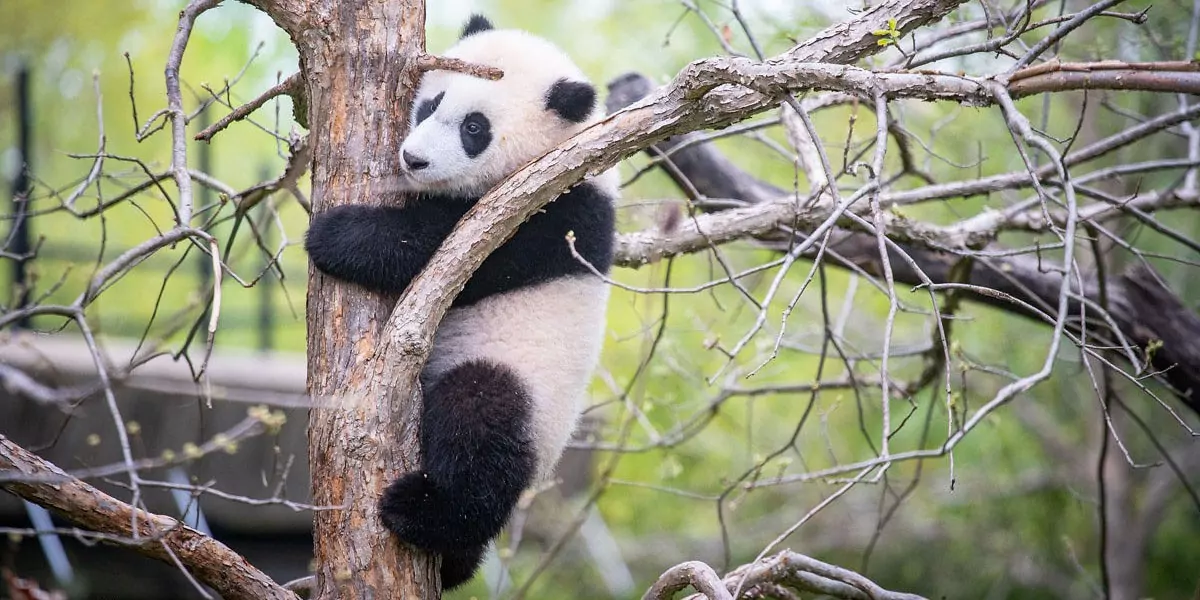
Panda Palooza at the Smithsonian National Zoo
Last updated: November 5, 2026
4 min read
Panda Palooza was the Smithsonian’s National Zoo’s farewell celebration for its three giant pandas, Mei Xiang, Tian Tian and Xiao Qi Ji, held from 23 September to 1 October 2023 before the family returned to China. The nine-day event gave Washington a last chance to say goodbye to a panda family that had been a fixture of the city for decades. The pandas left Washington on 8 November 2023 and landed in Chengdu, and the zoo’s panda habitat stood empty for the first time in years. If you have read about Panda Palooza and wondered what it was, why the pandas left, and what happened next, here is the full story.
What Panda Palooza included
The zoo packed the nine days with panda-themed programming so visitors of every age could mark the moment. The schedule included:
- Keeper-led panda talks on the animals’ diet, behaviour and care.
- Morning family stretching and yoga sessions, and live music on the zoo’s Mainstage.
- A conservation-themed scavenger hunt, arts and crafts, temporary tattoos and a kids’ area on the Great Meadow.
- Free screenings of Kung Fu Panda and the Smithsonian Channel documentary The Miracle Panda in the Visitor Center Theater.
- Panda-themed food and drink, plus a calligraphy station, themed treats and other activities provided by the Embassy of the People’s Republic of China.
It was part festival, part farewell, and a fitting send-off for animals that had drawn millions of visitors over the years.
Why did the pandas leave the zoo?
The departure was not a surprise and it was not a sign of anything wrong. Most giant pandas living outside China are there under time-limited cooperation agreements with the China Wildlife Conservation Association. Mexico’s Xin Xin descends from earlier diplomatic gifts. Modern loans typically run for around ten years, with the host zoo paying an annual conservation fee that has often been reported at around one million US dollars. Any cubs born abroad are also owned by China and normally go there a few years after birth. The National Zoo had hosted giant pandas almost continuously since 1972, when Ling-Ling and Hsing-Hsing arrived following President Nixon’s visit to China, and it had extended its agreements several times. By late 2023 the current agreement had run its course, so Mei Xiang, Tian Tian and Xiao Qi Ji returned to China.
Meet the three pandas who left
The trio who said goodbye in 2023 each had their own story. Tian Tian, the male, was 26 at the time. Mei Xiang, the female, was 25 and had become one of the most successful giant panda mothers outside China, with four surviving cubs raised at the zoo. Xiao Qi Ji, whose name means little miracle, was their three-year-old son, born on 21 August 2020 after Mei Xiang conceived through artificial insemination at 22, making her the oldest giant panda in the United States and the second oldest on record anywhere to give birth. In human care giant pandas commonly live to around 30, and some have reached their mid-thirties, so the older pair still had years ahead of them in China.
What happened after Panda Palooza
The empty habitat did not stay empty for long. Under a fresh agreement with China, two new giant pandas, the male Bao Li and the female Qing Bao, arrived at the National Zoo on 15 October 2024, flown in aboard a FedEx aircraft to Dulles International Airport. Both were three years old. There is a neat family link: Bao Li is the grandson of Mei Xiang and Tian Tian, through his mother Bao Bao, who was born at the zoo in 2013. After a settling-in period the two made their public debut on 24 January 2025, restoring a tradition that has run at the zoo for more than half a century. So Panda Palooza was a goodbye, but not the end of pandas in Washington.
Five decades of pandas in Washington
It helps to see Panda Palooza as one chapter in a long story. Giant pandas first came to the National Zoo in April 1972, when Ling-Ling and Hsing-Hsing arrived as a goodwill gesture after Nixon’s trip to China earlier that year. That original pair lived at the zoo for decades and became some of the most-visited animals in the United States, though none of their cubs survived. Mei Xiang and Tian Tian arrived in December 2000 under a research loan, and they proved far more successful as parents, raising Tai Shan, Bao Bao, Bei Bei and finally Xiao Qi Ji. By the time Panda Palooza took place the zoo had hosted giant pandas for more than fifty years, so the 2023 farewell really did close an era rather than just end a loan.
The conservation story behind the pandas
The panda loans are more than a diplomatic tradition. The Smithsonian has worked with Chinese institutions on giant panda research for over fifty years, contributing studies of panda reproduction, nutrition, behaviour and cub care that fed into breeding practice in zoos and at reserves in China. That work sits alongside the habitat protection that led the International Union for Conservation of Nature to reclassify the species from Endangered to Vulnerable in 2016. You can read more in our history of the giant panda.
If you were not able to attend Panda Palooza, the National Zoo’s giant panda story continues with Bao Li and Qing Bao, and the zoo still runs a live panda cam. For planning a trip, see our guide to pandas in Washington DC.
This article is part of our giant panda guide, which links every species, evolution and zoo article on the site.
Updated 14 September 2026: corrected factual details after a full review against primary sources.

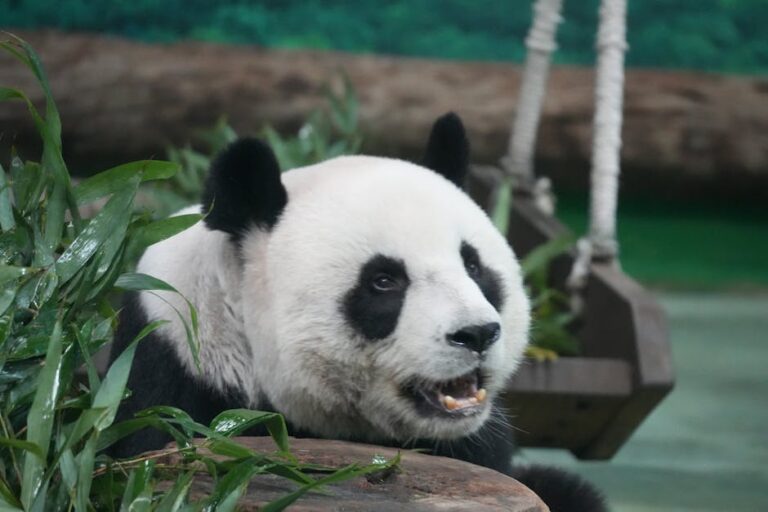

Went to Panda Palooza in late September. The morning yoga session was unexpectedly emotional. Tian Tian was right there during the whole class. End of an era for the National Zoo.
The 10 million per 10 years bit is worth flagging. The Smithsonian has been one of the highest-investment panda hosts in the world. Hope the next loan cycle is shorter so kids in 2027 do not have to go to Atlanta or San Diego for their first panda.
The 51-year US-China panda conservation collaboration is the longest single bilateral wildlife partnership of the modern era. People do not realise how much science actually happened underneath the cuteness.
Mei Hui, well said. The genetic work, reproductive research, and behavioural studies that came out of the National Zoo collaboration alone seeded the modern Chinese breeding programme. Most visitors only see the pandas; the science is the legacy.