Japan Is Without a Giant Panda for the First Time Since 1972
Last updated: November 16, 2026
5 min read
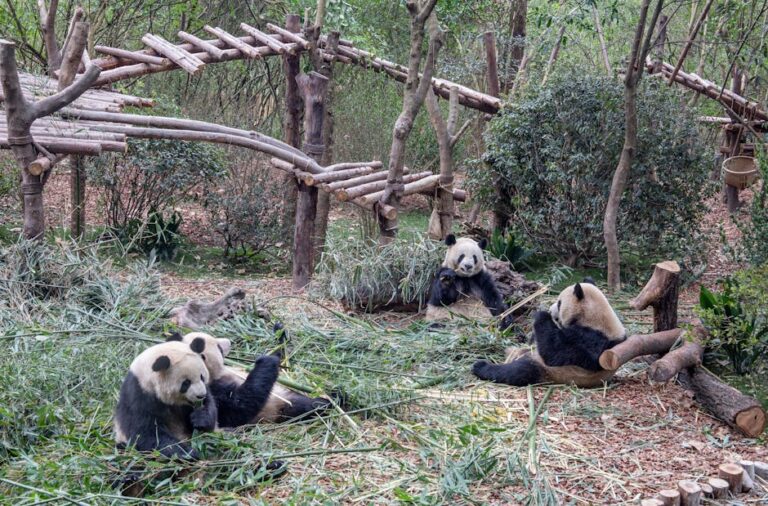
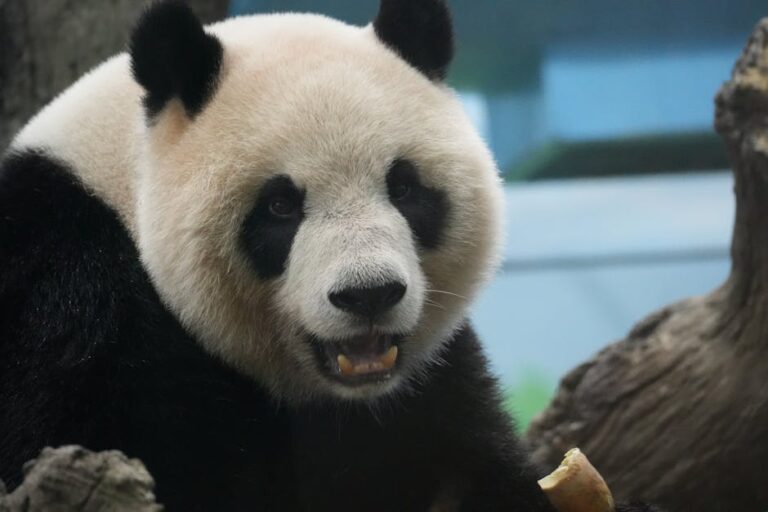
On 27 January 2026, two young giant pandas left Tokyo on a chartered flight bound for Sichuan. Their names are Xiao Xiao and Lei Lei, twin siblings born at Ueno Zoo in June 2021. They arrived at the breeding centre in Ya’an the following morning. As of that day, Japan no longer has a single giant panda within its borders. That has not been true since 1972.
The two animals were the last pandas in the country. Adventure World in Wakayama Prefecture, the other Japanese facility that hosted pandas for decades, returned its remaining four to China in June 2025. Ueno Zoo therefore became, briefly, the sole panda location in Japan. It carried that distinction for about seven months, until the schedule on Xiao Xiao and Lei Lei’s loan agreement came due.
This is not a crisis. The species is faring better than it was a generation ago, and these particular animals are not lost, they are simply living in China rather than Japan. But Japan, as a panda-watching country, has a longer continuous record than almost anywhere outside China, and the pause is worth pausing on.
Who Xiao Xiao and Lei Lei Were
Xiao Xiao is male, Lei Lei is female. They were born on 23 June 2021 to the resident Ueno pair, Ri Ri and Shin Shin. Their birth was unusual in a way that does not always get said clearly: surviving twin giant pandas are uncommon. In the wild, twin pandas are born regularly but the mother typically rears only one. Captive facilities hand-rear the second cub on a rotation, swapping one twin out for the other every few hours so the mother accepts both. That was the protocol that gave Japan two cubs instead of one in 2021.
They grew up under the kind of attention that follows zoo-born pandas almost everywhere. The Ueno enclosure was already operating with timed entry during peak periods, a holdover from the queues that had built up around their older sister Xiang Xiang in the late 2010s. Xiang Xiang, born in 2017 to the same parents, was a national phenomenon. Her face appeared on packaging, on station signage in Ueno, in newspapers that did not usually run zoo coverage. She returned to China in February 2023. The crowds shifted to her younger siblings within weeks.
Why Japan Is Now Panda-Free
The mechanics are simple, even if the timing has compounded into something that looks dramatic. Most giant pandas outside China are there on loan through the China Wildlife Conservation Association. Mexico’s Xin Xin descends from earlier diplomatic gifts. The loans are time-limited. They are also conditional on terms relating to the animals’ welfare, breeding rights, and the disposition of any cubs born during the loan, which by agreement remain Chinese property.
Ri Ri and Shin Shin, the parents of the Ueno twins, returned to China in September 2024. The official reason was their age and emerging health considerations. Both were nineteen, close to the upper bound of wild panda life expectancy and still respectable in captivity, but not the age at which a foreign zoo pushes for an extended stay. With the parents gone, the twins remained on a separate loan timetable that ran until early 2026.
Adventure World in Shirahama, Wakayama Prefecture, sat on a parallel timeline. The park ran one of the most successful captive breeding programmes for giant pandas outside China, producing 17 cubs from 12 births since 1994, more than any other non-Chinese facility. By June 2025, however, the last four pandas at the park, the female Rauhin and her daughters Yuihin, Saihin and Fuhin, were repatriated. The agreement had run its course and was not renewed.
So the two facilities arrived at empty enclosures within seven months of each other. There was no single decision, no announcement that Japan had lost panda access. Two separate contracts ran out of time, one after the other.
The Loan Model Built This Pause
China loans pandas, China takes pandas back, China decides who gets pandas next. China ended state gifts in 1982, used short exhibitions from 1984, and began modern long-term scientific cooperation in 1994. Kang Kang and Lan Lan, who arrived at Ueno in 1972 to mark the normalisation of China-Japan relations, were gifts in the old sense. The leases that followed come with annual fees, cub fees, research obligations, and explicit return windows.
Long-term host countries cycle through periods of having pandas and periods of not. The United States went through a similar gap recently before new arrivals at the San Diego Zoo and the National Zoo in 2024. The United Kingdom lost Tian Tian and Yang Guang in December 2023 when their Edinburgh loan ended without replacement. Other European hosts sit on their own fixed timetables. The cycle is the design, not a malfunction of it.
That matters more than the symbolism of a panda-free Japan. The loan model creates these gaps by construction. A host country either reaches an agreement for new animals or it does not. The animals themselves are not the variable. The diplomatic and contractual terms are.
Where the Species Stands
Giant pandas were reclassified from Endangered to Vulnerable on the IUCN Red List in 2016, after the 2014 wild census found a 17 percent population increase to 1,864 individuals. That status has not changed. Captive populations across Chinese and partner facilities are healthy enough that the species is no longer considered to be heading for short-term extinction, and the network of reserves in Sichuan, Shaanxi and Gansu has consolidated under Giant Panda National Park.
None of which means Japan is in a worse conservation position because its zoos are temporarily empty. The animals are not lost to the species. They are in Sichuan, where the species has always had its centre of gravity. Returns to China consolidate the breeding population and the genetic record in one country, which is closer to how the species existed before twentieth-century diplomacy spread it across the world’s capital cities.
What Tokyo Is Likely to Look Like Next
I do not think Japan will stay panda-free for long. The diplomatic value of pandas at Ueno is high enough on both sides that some form of new agreement seems more likely than not within a few years, though the timing will follow the state of relations between the two governments rather than anything the zoo controls. Ueno’s panda enclosure is purpose-built, the staff have decades of cumulative care experience, and the visitor demand is verified by every queue management system the zoo has ever installed. There is institutional memory on both ends.
The Ueno district itself still carries panda imagery everywhere. Souvenir shops, station decor, the local tourist board’s materials. None of that has been removed. The infrastructure of an animal-themed neighbourhood persists past the animal. I suspect it will look slightly odd for a year or two and then either be restocked with new arrivals or quietly continue as a kind of memorial branding, which is a known pattern in places where iconic zoo animals have departed without replacement.
The more interesting question is Adventure World. Wakayama’s breeding programme was one of the genuine technical successes of captive panda care outside China. Whether that institutional knowledge gets a new generation of animals to work with, or dissipates as the team moves on, will decide whether Japan keeps a serious panda research footprint. Tokyo will probably get its display animals back. Shirahama is a harder call.
Sources and further reading
- Ueno Zoo: Xiao Xiao and Lei Lei depart
- CNN: crowds bid farewell to Japan’s last pandas
- Nippon.com: pandas returning to China from Japanese zoos
- IUCN Red List: Ailuropoda melanoleuca
This article is part of our giant panda guide, which links every species, evolution and zoo article on the site.