Bao Li and Qing Bao: A Grandson Comes Home to the Smithsonian
Last updated: November 5, 2026
5 min read
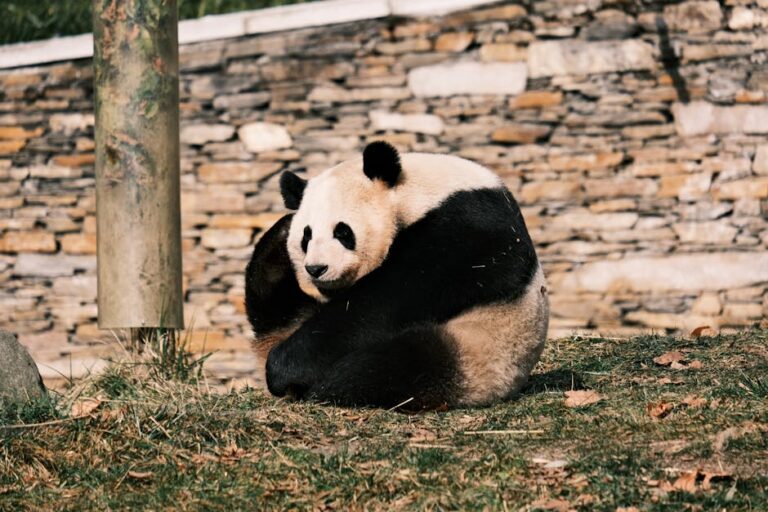
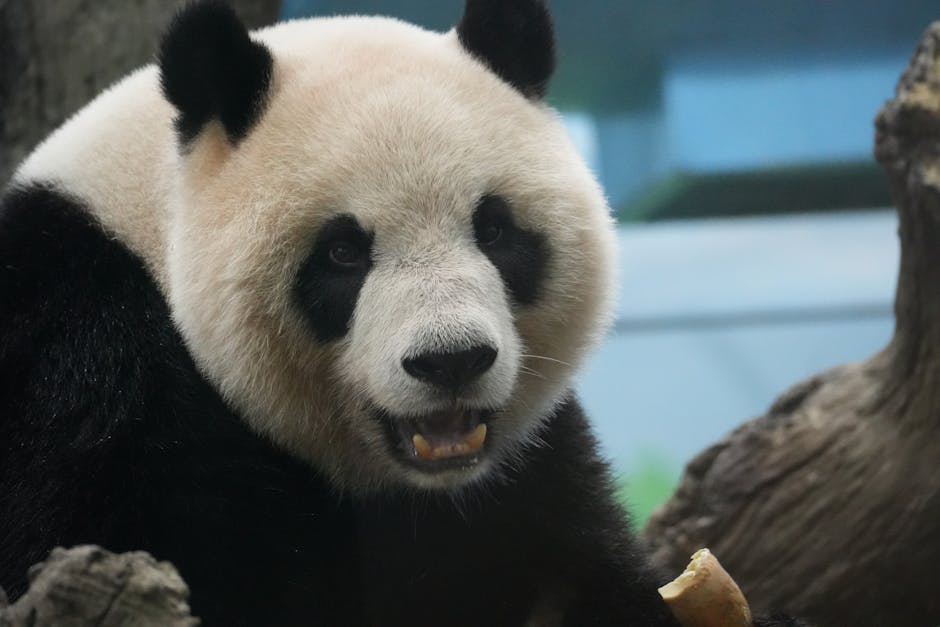
The pandas are back in Washington. After fourteen months without a single giant panda on display at the Smithsonian’s National Zoo, two young bears arrived from China in October 2024 and went out in front of the public for the first time in January 2025. Their names are Bao Li and Qing Bao. Both were born in Sichuan in 2021. And one of them is, in a small but real way, coming home.
A quiet stretch on Connecticut Avenue
For a few months in late 2023 and through most of 2024, the David M. Rubenstein Family Giant Panda Habitat sat empty. Mei Xiang, Tian Tian and their cub Xiao Qi Ji had flown back to China in November 2023 at the end of the previous research loan. The enclosure was still there, the bamboo grove was still planted, the keepers were still on staff, and the pandas were gone.
It was a strange stretch. The National Zoo had hosted giant pandas almost without interruption since 1972, and the absence was felt by anyone who wandered up the slope from the visitor centre expecting a black-and-white shape in the trees and found quiet instead.
That ended on the morning of 15 October 2024, when a FedEx 777 nicknamed the “Panda Express” landed at Dulles with two crates on board.
The lineage behind Bao Li
What gets me about this particular pair is the lineage. Bao Li is not just any panda flown in from Sichuan. He is the grandson of Mei Xiang and Tian Tian, the bears most American visitors of the last twenty years actually grew up watching.
His mother is Bao Bao, born at the Smithsonian on 23 August 2013. I remember the live panda cam coverage. Bao Bao stayed in Washington for three and a half years, returned to China in February 2017 as the loan terms required, and in 2021 produced her own cub. That cub is Bao Li, born on 4 August 2021, and he came to Washington from the Shenshuping base in the Wolong National Nature Reserve.
So when Bao Li ambled into the Rubenstein habitat in January 2025, he was walking ground his mother had been born on. That kind of continuity does not happen often in captive panda exchanges. The loans are designed around the science, not around sentiment, and yet sentiment is what you feel reading the family tree.
Qing Bao, the female, comes from a different line. She was born on 12 September 2021 in Sichuan, to Jia Mei and Qing Qing, and arrived in Washington on the same flight. She is unrelated to Bao Li, which is the point: the pair are a fresh genetic pairing for the breeding programme. The agreement runs ten years, to 2034.
Why the Smithsonian programme matters
The Smithsonian’s giant panda programme is one of the longest-running conservation collaborations between the United States and China, and it sits inside a small handful of zoos worldwide that have produced meaningful captive-breeding science. Calling it a new panda exhibit undersells it.
The first pair, Ling-Ling and Hsing-Hsing, arrived in April 1972, a few months after President Nixon’s visit to China. They were a diplomatic gift, not a loan, and they lived out their lives in Washington. They never produced a surviving cub, but the husbandry data the keepers gathered over two decades became part of the foundation later programmes built on.
Mei Xiang and Tian Tian arrived on 6 December 2000 under the loan model that is now standard. Across twenty-three years in Washington they produced four surviving cubs: Tai Shan in 2005, Bao Bao in 2013, Bei Bei in 2015 and Xiao Qi Ji in 2020. Each contributed to the captive gene pool. The species was downlisted from Endangered to Vulnerable by the IUCN in 2016, a change driven by the 2014 wild census across Sichuan, Shaanxi and Gansu. The Smithsonian’s work, like the work at every partner facility, was a contribution to that picture rather than its main cause.
That contribution is not visible from the viewing path. It is artificial insemination protocols (Mei Xiang’s pregnancies were almost all assisted), neonatal cub care, behavioural enrichment, nutrition research, and the slow accumulation of veterinary knowledge that comes from caring for a species we still do not fully understand. When a cub is born at Wolong today and survives where one might have died thirty years ago, some fraction of that improvement traces back to data that came out of Washington.
What free admission actually means
The Smithsonian’s National Zoo charges no admission. Not for the zoo, not for the panda habitat, not for the children’s enrichment area, not for the bird house. You walk up, you walk in, and you stand in front of the bears.
I have visited a lot of major panda exhibits over the years: Chengdu, Bifengxia, San Diego before Bai Yun left, Adelaide, Edinburgh. Every one of them charged a substantial entry fee. Many sat at the end of a long drive from the nearest city. Most required a pre-booked timed slot. The barriers to seeing a panda are usually high enough that a family on a tight budget might decide to skip it.
Washington is the exception. The zoo sits in Woodley Park, in a residential city neighbourhood along the lip of Rock Creek. Take the Metro to Cleveland Park or Woodley Park, walk fifteen minutes, and you are at the gate. Admission is free, but visitors need a reserved entry pass. Check the Smithsonian’s official pass page before travelling.
For a school group from a Baltimore public school, that matters. For a family driving in from West Virginia for a weekend in the capital, that matters. For a tourist already in Washington for the museums on the Mall, the zoo is one more free institution in a city full of them. I would argue, and I do argue, that this makes the National Zoo the most genuinely accessible major panda exhibit in the world. Not the largest, not the most modern, not necessarily the best research facility, but the easiest for an ordinary visitor to reach. That accessibility builds the audience that supports the species.
What to expect if you visit
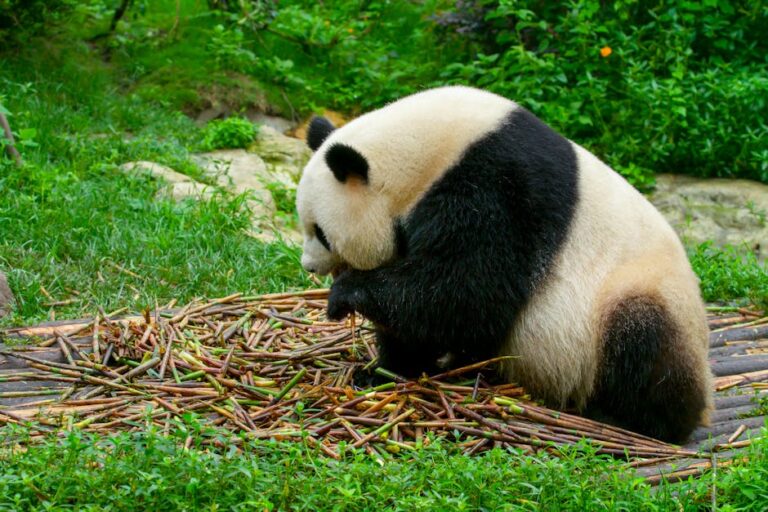
The Rubenstein habitat sits near the centre of the zoo grounds, at the top of the Asia Trail. Both bears have indoor and outdoor enclosures, with viewing windows indoors for cold or wet days. Caregivers restock fresh bamboo several times each day, and activity varies across the day. The rest of the time they do what pandas do, which is sleep, doze, chew bamboo with their eyes half closed, and occasionally roll onto their backs to chew bamboo with their eyes half closed.
Bao Li and Qing Bao are housed separately, as adult giant pandas are outside brief breeding windows, though they are neighbours along a shared fenceline with mesh “howdy” windows that let them see, smell and call to each other. Both turned four in 2025. Keepers expect breeding attempts once the bears reach full sexual maturity around five or six. Whether those attempts produce a cub remains to be seen. The base rate for successful captive breeding is not high.
The zoo grounds open at 8am, with last entry at 5pm. I would aim for early. Pandas, like most bears, are most active in the cool of the morning, and the crowds are thinnest then too.
This article is part of our giant panda guide, which links every species, evolution and zoo article on the site.
Updated 14 September 2026: corrected factual details after a full review against primary sources.