Panda Diet: How a Bear Became a Bamboo Specialist
A giant panda eats up to 38 kg of bamboo a day with the gut of a carnivore. Here is how the diet shift happened, what the broken umami gene did, and why the microbiome never caught up.


A giant panda eats up to 38 kg of bamboo a day with the gut of a carnivore. Here is how the diet shift happened, what the broken umami gene did, and why the microbiome never caught up.
From a pelt sent to Paris in 1869, through the trophy expeditions, to Su Lin at Brookfield Zoo and the WWF logo: how the giant panda became the animal the West cannot leave alone.

Around a million US dollars a year for a pair, a $600,000 fee for every cub born, a million-dollar life insurance policy, and an operating bill that dwarfs all of it. What renting a giant panda from China actually involves.

Giant pandas are bears, settled by DNA in 1985. Here are the ten traits that made biologists argue about it for a century, from the pseudo-thumb to the broken umami gene.

A 2017 comparative study scored the panda patch by patch against 195 other carnivores. The white is snow camouflage, the dark limbs are shade, and the face is a signal.
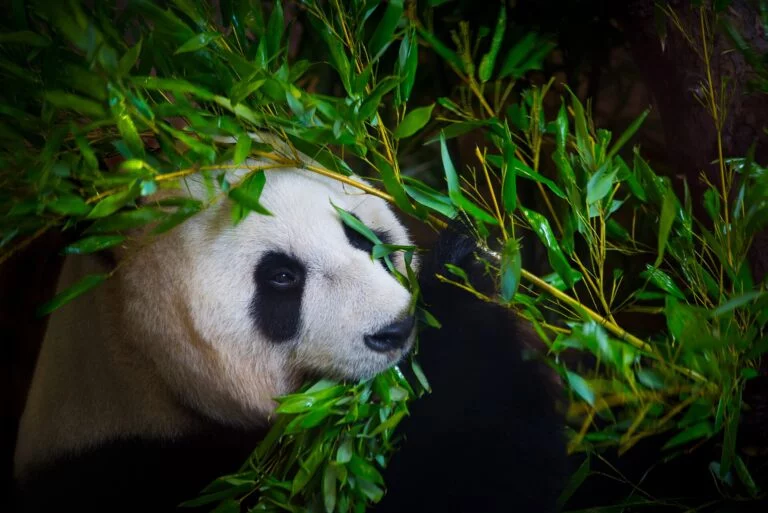
The giant panda from the 19-million-year split in the bear family tree through the 1869 Western discovery, panda diplomacy, the 1,114 low point and the 2016 downlisting to Vulnerable.
We send one careful panda roundup per month. Conservation news, species profiles, the occasional reader question we could not resist answering.
We never share your email. One-click unsubscribe.