

Are Pandas Bears? 10 Ways They Differ from Other Bears
Last updated: November 5, 2026
7 min read
Yes, giant pandas are bears. They sit in the family Ursidae alongside the other seven living bear species. But they split from the rest of the bear family about 19 million years ago and have since evolved so many oddities that biologists genuinely questioned the classification for over a century. DNA settled it in 1985. The differences are still striking: a pseudo-thumb, a bamboo diet with carnivore plumbing, no hibernation, tiny cubs, broken umami taste, and a gut microbiome unlike any other ursid.
Key facts at a glance
| Family | Ursidae (bears) |
| Living bear species | 8 (giant panda, brown, polar, Asiatic black, American black, sun, sloth, spectacled) |
| Panda divergence from other bears | About 19 million years ago |
| DNA confirmation | O’Brien et al. 1985, Nature |
| Pseudo-thumb | Unique to giant pandas among bears, and convergently in the red panda |
| Hibernation | Giant pandas do not hibernate; brown and American black bears do |
| Newborn weight | About 100 g, roughly 1:900 of the mother’s weight |
| TAS1R1 umami gene | Pseudogenised in pandas, functional in other bears |
| Bite force quotient | About 151 (panda), 78 (brown bear), 64 (American black bear) |
| Position in the family tree | Sister to all seven other living bears |
Are pandas actually bears? The resolved debate
From the moment Pere Armand David shipped the first giant panda skin to Paris in 1869, taxonomists argued about the species. The proposals included:
- A bear (Ursidae), based on skull, dentition, and overall body plan
- A giant relative of the red panda (Ailuridae), based on the shared pseudo-thumb and bamboo diet
- Its own separate family (Ailuropodidae), based on the genuinely unusual mix of traits
The debate dragged on for over a century. In 1985, Stephen O’Brien and colleagues at the US National Cancer Institute used DNA hybridisation and chromosome banding to compare the giant panda against red pandas, raccoons, and the other bears, and published the result in Nature. The answer was unambiguous: the giant panda is a bear. It just happens to be on a deep, early-branching twig of the Ursidae phylogeny that split off about 19 million years ago, before the other seven species diversified.
That 19 million year head start is the source of all the oddity. Plenty of time to evolve into a bamboo specialist while the rest of the family stayed on a more typical omnivorous to carnivorous diet.
The 10 differences
1. The pseudo-thumb
The most famous panda quirk. The sixth digit is actually the radial sesamoid, a wrist bone that has been enlarged and repurposed to oppose the five real fingers and grip bamboo. No other bear has anything like it. The red panda evolved a strikingly similar pseudo-thumb completely independently, in a different family altogether.
2. Bamboo diet on a carnivore gut
Pandas eat about 99 percent bamboo by mass. No other bear is a specialist herbivore. The closest analogue is the spectacled bear, which leans heavily on fruit and vegetation but is still genuinely omnivorous. Brown and American black bears are omnivores too, but their meat fraction is much higher than the panda’s. The panda is the only ursid that is functionally herbivorous, despite having a gut still built for digesting meat. Full detail on the diet in our piece on the panda bamboo diet.
3. No hibernation
Brown bears and American black bears hibernate in true torpor. Most other bear species do not, and giant pandas do not either. The reason is simple: bamboo is available year-round in their habitat, and the panda’s energy budget could never support building the fat reserves a months-long sleep requires. Pandas just descend to lower elevations in winter and keep eating. For more on this, see our piece on why pandas do not hibernate.
4. Tiny cubs
Newborn pandas are about 100 g, the size of a stick of butter. That is roughly 1:900 of the mother’s body weight, the most extreme newborn-to-mother ratio of any bear by a wide margin. The leading explanation is that the bamboo diet is too low in calories to support a longer in-utero gestation, so the cub is essentially born premature and finishes developing externally on milk.
5. Different vocalisations
Pandas bleat, honk, chirp, and bark when stressed. They do not roar the way other bears can. The bleating call in particular is more sheep-like than bear-like and is used during oestrus by both sexes for long-distance communication.
6. Solitary social structure
Adult pandas live solitary lives with overlapping home ranges, coming together only during the brief mating season. Several other bears are similar, but pandas take the solitary pattern further: they rarely interact even when they encounter each other, and male competition is more about scent marking and avoidance than direct combat.
7. Black and white coloration
Unique among bears. Caro and colleagues, writing in Behavioral Ecology in 2017, treated each patch separately and found that the white fur works as camouflage against snow, the dark shoulders and legs give crypsis in shade, and the head markings serve as signals rather than concealment.
8. Broken umami taste gene (TAS1R1)
The TAS1R1 umami taste receptor gene is functional in every other bear and most other carnivores. In pandas, it is a pseudogene: present but inactive. Pandas cannot taste the savoury meat flavour that other ursids find rewarding. The mutation happened roughly 4 million years ago, lining up with the diet shift.
9. Powerful, broad jaw
The panda skull is broader and more dome-shaped than other bears, with massive temporalis muscles attached to a pronounced sagittal crest. Christiansen and Wroe’s 2007 survey of carnivore bite forces gave the panda a bite force quotient of about 151, the highest in the family, against 78 for the brown bear and 64 for the American black bear. In absolute terms the panda bite is roughly 292 pounds, a number you will often see misquoted as the quotient itself.
10. Specialised gut microbiome
Pandas retain a carnivore-like gut and microbiome. Studies find little microbial digestion of cellulose and lignin, so pandas compensate through selective feeding, high intake and rapid passage.
Where the other seven bears differ
For context, here is how the other seven living bear species compare on a few of the same axes.
- Brown bear (Ursus arctos): Omnivorous, hibernates, large range across Eurasia and North America. The standard big bear.
- Polar bear (Ursus maritimus): Most carnivorous bear, marine seal hunter, does not truly hibernate. Closely related to brown bears.
- Asiatic black bear (Ursus thibetanus): Omnivorous, partial hibernation in cold regions, distinctive white chest crescent.
- American black bear (Ursus americanus): Smaller, omnivorous, hibernates, the most numerous bear species.
- Sun bear (Helarctos malayanus): Smallest bear, tropical Southeast Asia, long tongue for insects and honey, does not hibernate.
- Sloth bear (Melursus ursinus): Specialised insectivore, South Asian, shaggy coat, lacks the two upper middle incisors so it can vacuum termites out of a mound.
- Spectacled bear (Tremarctos ornatus): Only South American bear, sole survivor of the Tremarctinae branch, mostly vegetarian. The most plant-leaning bear after the panda.
What makes the panda still a bear
Given all that, why are pandas in Ursidae? Three lines of evidence settled the question.
- Skeleton and skull anatomy. Pandas have the same plantigrade gait, the same basic skull shape, and the same dental formula (with bamboo-specific modifications) as other bears.
- DNA. O’Brien’s 1985 work and every genome study since has placed the giant panda firmly within Ursidae, on a deep branch that split before the other seven species diversified.
- Reproductive biology. Delayed implantation, helpless newborns that nurse for months, and gestation patterns broadly similar to other bears.
If pandas had been the only living bear, biologists might have classified them in a separate family. The reason they sit in Ursidae is comparative: lined up against brown bears, polar bears, and the rest, the shared structure outweighs the bamboo-specific oddities. The honest summary is that pandas are weird bears, not that pandas are not bears.
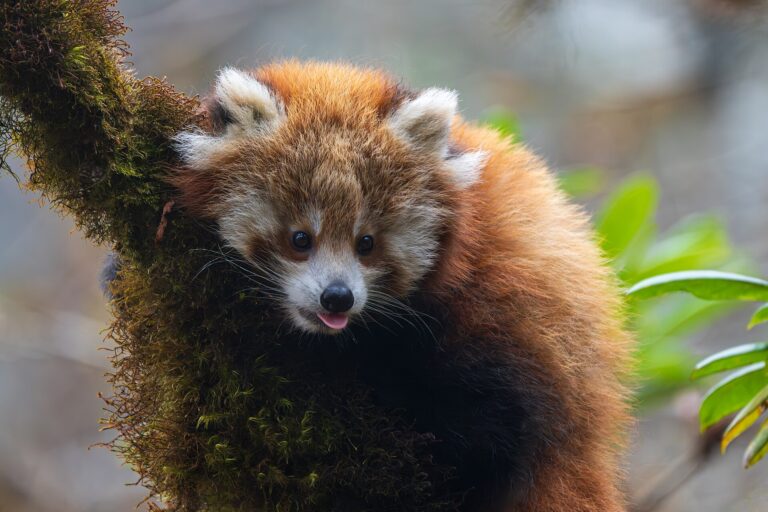
For more on related questions, see our pieces on the history of the giant panda, the species profile, and the red panda profile (which is not a bear at all).
Panda merchandise
Browse panda-themed panda books and gear at our store, store.welovepandas.org.
Read next
- Panda Facts: 50+ Surprising Things About Giant Pandas and Red Pandas (2026)
- How Long Do Pandas Sleep, and Where Do They Sleep?
- Other Zoos Where You Can See Giant Pandas
Frequently asked questions
Are giant pandas actually bears?
Yes. Family Ursidae, confirmed by DNA analysis in 1985 by Stephen O’Brien and colleagues. They split from the other bears about 19 million years ago, which is why they look so different despite sharing the basic bear body plan.
Why are pandas so different from other bears?
About 19 million years of bamboo-focused evolution. The diet shift drove parallel changes in skull and jaw anatomy, digestion, microbiome, taste perception, reproductive timing, and movement. Other bears never specialised this way.
Do giant pandas hibernate?
No. They live in temperate mountain forests where bamboo is available year-round, and a bamboo diet cannot build the fat reserves hibernation needs. Brown, American black and Asiatic black bears can all hibernate.
Why is the panda’s pseudo-thumb special?
It is not a thumb at all, but an enlarged wrist bone, the radial sesamoid, repurposed to oppose the real five digits and grip bamboo. No other ursid has anything like it. The red panda evolved a similar pseudo-thumb independently.
Are panda cubs really born that small?
Yes. About 100 g at birth, roughly 1/900 of the mother’s body weight, by far the most extreme ratio in the bear family. The leading explanation is that the bamboo diet does not provide enough calories for a longer in-utero gestation.
Can pandas taste meat?
Not really. The TAS1R1 umami taste gene is pseudogenised in giant pandas, so they have lost the ability to taste the savoury flavour that other carnivores find rewarding. Other bear species still have working umami receptors.
Are red pandas in the same family as giant pandas?
No. Red pandas are in their own family, Ailuridae. They share an order, Carnivora, with giant pandas but their lineages parted tens of millions of years ago. The shared bamboo specialty and pseudo-thumb are independent convergent adaptations.
Which bear is most closely related to the giant panda?
None of them, in the sense people usually mean. The panda lineage split off first, so all seven other living bears are equally distant from it. Among those seven, the spectacled bear diverged next, about 13 million years ago, leaving the six ursine bears as a group closer to each other than to either the panda or the spectacled bear.
Sources and further reading
- O’Brien et al. 1985, Nature: A molecular solution to the riddle of the giant panda’s phylogeny
- Christiansen and Wroe 2007, Ecology: Bite forces and evolutionary adaptations to feeding ecology in carnivores
- Caro et al. 2017, Behavioral Ecology: Why is the giant panda black and white?
- IUCN Red List: Ailuropoda melanoleuca
- Smithsonian National Zoo: giant panda
Related reading: the giant panda life cycle, 21 cool panda facts, and the red panda profile for a closer look at convergent evolution in action.
This article is part of our giant panda guide, which links every species, evolution and zoo article on the site.
Updated 14 September 2026: corrected factual details after a full review against primary sources.




The 1985 O’Brien paper is a great anchor. It is wild that the panda taxonomy debate ran for over 100 years and was settled by DNA hybridisation in one Nature publication.
Spectacled bear being the closest living relative is the bit nobody knows. Most people assume polar or grizzly. The South American connection is genuinely surprising.