
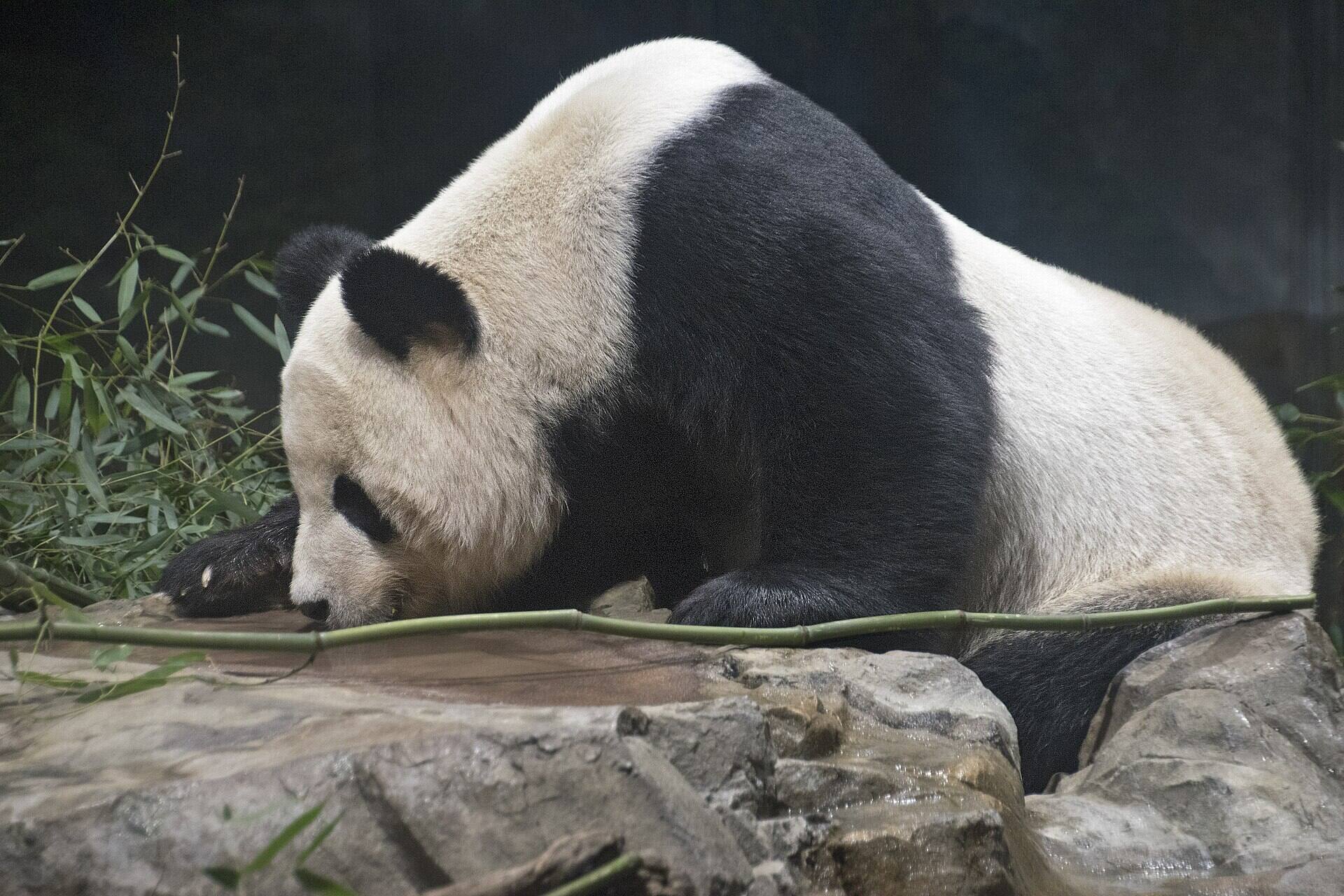
Wolong National Nature Reserve: A Panda Conservation Story
Last updated: November 5, 2026
5 min read
Wolong National Nature Reserve in Sichuan is the flagship of Chinese panda conservation. It was set up in 1963 at around 200 square kilometres and expanded in 1975 to about 2,000, covering a block of the Qionglai mountains in Wenchuan County. It holds the original base of the China Conservation and Research Center for the Giant Panda, has been part of the UNESCO-listed Sichuan Giant Panda Sanctuaries since 2006, and was hit harder than any other panda facility by the 2008 Wenchuan earthquake.
Key facts
- Established: 1963, expanded 1975.
- Area: about 2,000 square kilometres.
- Location: Wenchuan County, Sichuan Province, on the eastern edge of the Tibetan Plateau.
- Wild pandas: around 150 in China’s third national survey, conducted from 1999 to 2003.
- Recorded species: more than 4,000.
- Breeding centre: China Conservation and Research Center for the Giant Panda. Original base at Hetaoping, replacement base at Shenshuping in Gengda township.
- UNESCO status: part of the Sichuan Giant Panda Sanctuaries World Heritage Site, inscribed 2006.
What Wolong covers
The reserve climbs from about 1,200 m to 6,250 m, which is why it packs in everything from warm broadleaf forest at the bottom to alpine meadow and bare rock at the top. Pandas do not use most of that. They sit in the mixed forest band with a dense bamboo understorey, roughly 2,300 to 3,200 m, and move up and down within it with the seasons. More than 4,000 species have been recorded across the reserve as a whole.
The terrain is steep and folded, and access follows the Pitiao river up the valley on a single road. The panda bases sit along that road. Most of the reserve behind them is roadless.
The research centre and captive breeding
In 1980 the Chinese government reached an agreement with WWF to build the China Conservation and Research Center for the Giant Panda inside Wolong. WWF was the first international conservation organisation invited to work in China, and the centre became operational in 1983 at Hetaoping. Techniques worked out and refined across the Chinese breeding programme include hormone monitoring to pin down the very short oestrus window, artificial insemination, and the twin-swap protocol that rotates two cubs between mother and incubator so both survive.
Getting captive-bred pandas back into the wild took longer. Cubs are raised in enclosed wild-training zones by keepers dressed in panda suits to avoid habituating them to people, and their readiness is tested with a stuffed leopard and recordings of predator calls: a cub that ignores it is not ready. Tao Tao was released into Liziping Nature Reserve in Shimian County on 11 October 2012 and became the first captive-bred giant panda successfully reintroduced. Zhang Xiang followed in November 2013, the first female. Released animals are tracked by collar.
The 2008 Wenchuan earthquake
The magnitude 7.9 earthquake of 12 May 2008 had its epicentre about 30 km from Wolong. The Hetaoping base was destroyed. Six pandas escaped when their enclosures came apart. One, a nine-year-old female called Mao Mao, was found dead, crushed by an enclosure wall. Another, Xiao Xiao, was missing for a period afterwards. Five staff at the centre were killed.
The surviving pandas were moved out to the Bifengxia base near Ya’an, about 140 km from Chengdu, while the future of the site was decided. The landscape took damage too: landslides and mudflows through the reserve cut total forest cover by roughly 10 percent, though follow-up surveys found remnant vegetation across most of the damaged ground, which matters for recovery.
Rebuilding at Shenshuping
Hetaoping was not rebuilt as a public base. Hong Kong offered reconstruction aid within weeks of the quake and signed an agreement that October, eventually funding 1.422 billion yuan across 23 reconstruction projects, and the replacement panda base went up at Shenshuping in Gengda township, further down the valley on safer ground. It covers about 150 hectares.
Shenshuping began trial operation on 30 October 2012, when 18 pandas came back to Wolong from Bifengxia, and opened to the public on 11 May 2016. It is divided into a visitor area, a wild-training area and a reintroduction area. Hetaoping remains closed to the public, so all panda viewing at Wolong now happens at Shenshuping.
Wolong today
Wolong is now one unit inside the Giant Panda National Park, which was piloted from 2017 and formally established in October 2021. The park pulls Wolong together with dozens of previously separate reserves across Sichuan, Shaanxi and Gansu into a single management body of about 22,000 square kilometres, with the specific aim of reconnecting panda subpopulations that reserve boundaries had left isolated.
The wider picture has improved. The 2014 national census counted 1,864 wild giant pandas, and on the strength of that the IUCN moved the species from Endangered to Vulnerable in 2016. It has never been listed as Critically Endangered. Wolong itself continues as a field site for work on wild panda ecology, bamboo flowering cycles and climate impact in the Qionglai range.
Related reading on welovepandas
- 5 panda sanctuaries to see
- The new giant panda mega reserve
- Species Profile: The Giant Panda
- The captive breeding program
- Giant panda habitat under pressure
- Panda conservation pays billions back
Sources and further reading
- UNESCO World Heritage Centre: Sichuan Giant Panda Sanctuaries, Wolong, Mount Siguniang and Jiajin Mountains
- Zhang, J. et al. (2011). Impact of the 2008 Wenchuan earthquake on biodiversity and giant panda habitat in Wolong Nature Reserve, China. Ecological Research.
- China Conservation and Research Center for the Giant Panda
- IUCN Red List: Ailuropoda melanoleuca
- WWF: Giant Panda
This article is part of our Panda Conservation hub.
Read next
- Panda Facts: 50+ Surprising Things About Giant Pandas and Red Pandas (2026)
- Giant Panda National Park: China's Mega-Reserve Explained
- Qizai, the Brown Panda: The Untold Story of the Qinling Lineage
Frequently asked questions
Where is Wolong reserve?
Wenchuan County, Sichuan Province, on the eastern edge of the Tibetan Plateau, in the Qionglai mountains west of Chengdu.
Can I visit Wolong?
Yes. Panda viewing is at the Shenshuping base in Gengda township, which opened to the public in May 2016. The older Hetaoping base was destroyed in the 2008 earthquake and is not open to visitors.
How many pandas live there?
China’s third national panda survey, conducted from 1999 to 2003, put the wild figure at around 150, roughly a tenth of the wild population at the time. Shenshuping adds a captive group on top of that.
Was Wolong destroyed in the 2008 earthquake?
The Hetaoping panda base was destroyed. One panda, Mao Mao, was killed and five staff died. The surviving pandas were evacuated to Bifengxia near Ya’an and a new base was built at Shenshuping.
Have any Wolong pandas been released into the wild?
Yes. Tao Tao went into Liziping Nature Reserve on 11 October 2012 as the first captive-bred panda successfully reintroduced, and Zhang Xiang followed in November 2013 as the first female. Both were raised in wild-training enclosures first.
Is Wolong now part of a bigger park?
Yes. Since the Giant Panda National Park was formally established in October 2021, Wolong sits inside a single conservation unit of about 22,000 square kilometres spanning Sichuan, Shaanxi and Gansu.
This article is part of our panda conservation guide, which links all our reporting on threats, breeding and release.
Updated 14 September 2026: corrected factual details after a full review against primary sources.



Visited Hetaoping in 2019 and the rebuild looked impressive from the outside. Did not realise until reading this that the original site was that badly hit in 2008. The valley really does feel cut off when you drive up the Pitiao, only one road in.
Quick question, are the reintroduction trials at Liziping considered successful at this point or is it still too early to call? You mention mixed results which is honest but I am curious if any of the collared individuals are still tracked or if mortality was the main outcome.
Ed, mixed is the fair word. Of the captive-raised pandas released into Liziping, one (Xiang Xiang) died within a year, which set the program back hard. Later releases used pre-release training and survival rates improved, but the long-term ecological integration question is still open. A handful of collared individuals are alive and tracked, but breeding into the wild population is the real milestone and not many have reached it.
the elevation range of 1,200 to 6,000m blew my mind, that is essentially sea level forest up to ice and bare rock all in one reserve. no wonder bamboo flowering events hit different stands at different times, the altitude diversity is its own insurance policy.