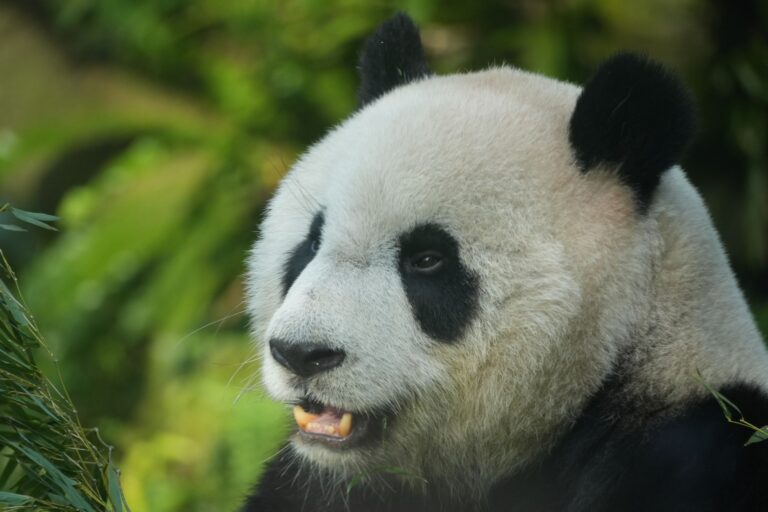
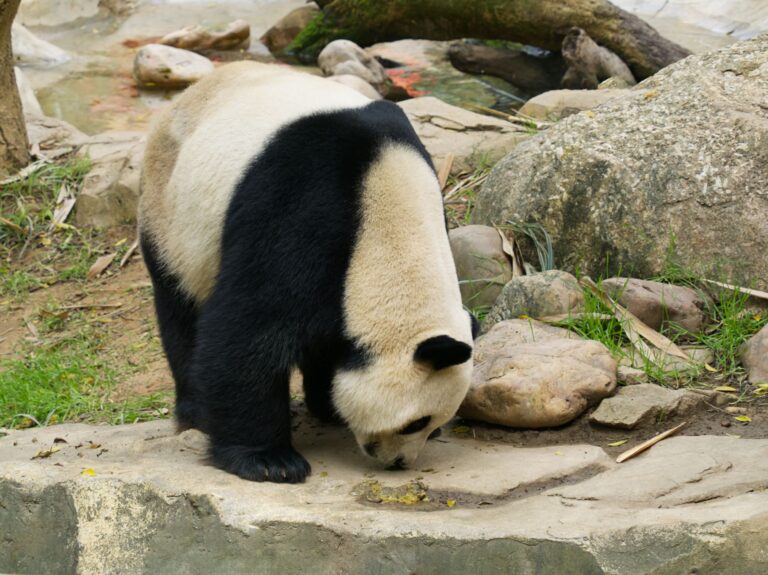
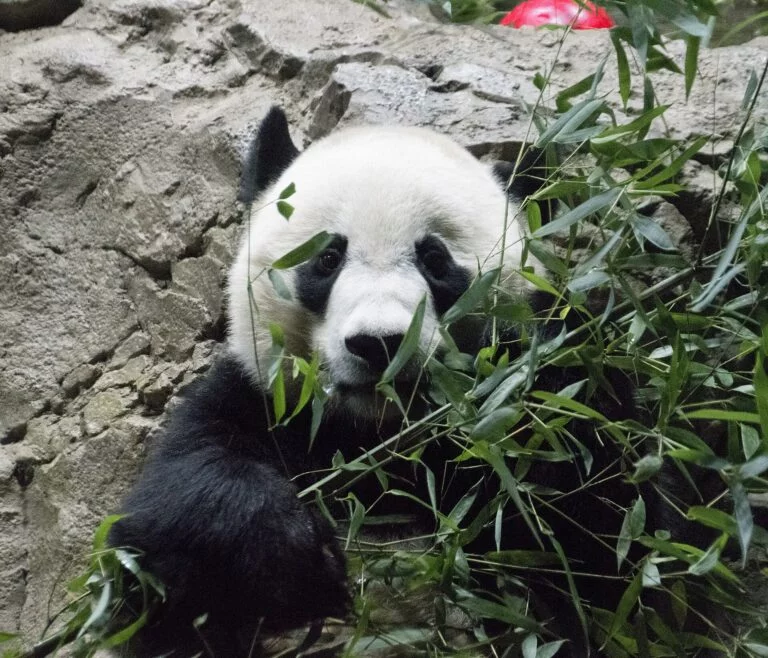
Madrid’s Pandas: Europe’s Longest Panda History
Last updated: November 5, 2026
5 min read
On 4 September 1982, a small pink hairless creature about the size of a stick of butter was born at Zoo Aquarium de Madrid. He was named Chu-Lin. He weighed maybe 100 grams. And he was the first giant panda ever born in Europe.
I want to start the story there, not at the more obvious starting point of arrival dates and royal gifts, because Chu-Lin is the fact that should anchor any conversation about European panda history. Before him, every panda in Europe was an import. After him, Europe was a continent that could produce a giant panda cub of its own, on its own grass, under its own veterinarians. That is the moment Madrid earns its place at the front of this story.
It is also the reason I find it strange that when people in the UK or the US talk about European pandas, they usually reach for Berlin or Beauval first. Both are excellent programmes. Berlin has had cubs born in 2019 and 2024 and a beautifully designed Panda Garden. Beauval gave us Yuan Meng in 2017, France’s first panda birth, and a media circus to match. They deserve the attention. But the deepest panda roots in Europe are not in Germany or France. They are in Spain, and they run back to 1978.
The 1978 arrival: a gift, not a loan
The Madrid story begins on 24 December 1978, when two pandas named Shao Shao and Chang Chang stepped out of crates at Zoo Aquarium de Madrid. They were a goodwill gift from the People’s Republic of China to King Juan Carlos I of Spain, marking the recent normalisation of diplomatic ties between the two countries.
This detail matters more than it sounds. China ended state gifts in 1982, used short exhibitions from 1984, and moved to modern long-term scientific cooperation in 1994. Anything that arrived before then arrived as an outright diplomatic gift. Shao Shao and Chang Chang did not have a ticking ten-year clock attached to them. They were Spain’s pandas, full stop, until they died. That is a kind of panda residency that does not exist any more, anywhere in the world. Most pandas outside China now live under time-limited scientific-cooperation loans. Mexico’s Xin Xin descends from pandas given before the loan system.
So when I count Madrid’s panda years, I count from December 1978. Not from 2007, when the Bing Xing era began, and certainly not from 2024.
Chu-Lin, 1982: the first European panda birth
Shao Shao was the mother. The father, almost certainly, was not Chang Chang.
Chang Chang showed no interest in his enclosure mate, so in April 1982 the Madrid team inseminated Shao Shao with semen from Chia Chia, the male at London Zoo. Keepers and vets put the odds at about 99 percent that Chia Chia is Chu-Lin’s father, with a residual chance that Chang Chang got there first. Either way, Chu-Lin was the first giant panda born by artificial insemination anywhere in the Western world. Panda AI was a young technique at the time: Beijing Zoo had pioneered it in the 1970s, the field was small, the science was fragile, and most cubs born this way did not survive.
Chu-Lin survived. He grew up at Madrid. He became a Spanish national celebrity in the way that Chi-Chi had been a British one and Su-Lin an American one. Even now, decades after his death in 1996, you will find Spaniards in their forties and fifties who can tell you exactly where they first saw him. His mounted specimen is now on display at the Museo Nacional de Ciencias Naturales.
I think Chu-Lin should be in every list of historically significant captive pandas, the way Su-Lin (the first live panda taken to the West, 1936) and Chi-Chi (the inspiration for the WWF logo) routinely are. He is not, usually. That is another small injustice in how panda history gets told.
The Bing Xing and Hua Zui Ba era: 2007 to 2024
For a stretch after Chu-Lin, Madrid was a panda-hosting zoo without a breeding programme of the same scale. The next chapter began on 7 September 2007, when Bing Xing (male) and Hua Zui Ba (female) arrived from Chengdu under a ten-year loan, later extended.
They turned out to be one of the most productive captive pairs Europe has seen: six cubs over their years together. Twins came first, in 2010. A female named Chulina, in homage to Chu-Lin, was born on 31 August 2016. The last were twins again, Jiu Jiu and You You, in September 2021. Every one of these cubs grew up in front of Spanish keepers and eventually went back to China, because the loan terms said so.
On 29 February 2024, the whole family flew home. Bing Xing, Hua Zui Ba and their remaining cubs were repatriated to Chengdu, and for a couple of months Madrid had no pandas for the first time in decades.
Jin Xi and Zhu Yu: the new pair
The gap did not last. On 29 April 2024, a new young pair flew in from Chengdu: Jin Xi, a male, and Zhu Yu, a female, both born in 2020. They went through quarantine and acclimatisation out of public view, then made their public debut on 30 May 2024, on a ten-year agreement.
I will not pretend to know whether they will breed. Young pairs often take years to settle into compatibility, and the captive panda literature is full of pairs that never produced a cub no matter how good the conditions. What I do know is that the handover was clean, and Madrid’s run as a panda city goes on.
How to visit
Zoo Aquarium de Madrid sits inside Casa de Campo, west of central Madrid. Metro Line 10 serves Casa de Campo. The Teleferico cable car is closed for reconstruction, with reopening expected in late 2027 or early 2028.
The panda enclosure is signposted from the main entrance. As at most well-run zoos, the pandas are at their most visible in the cooler morning hours, when they tend to be on their feet eating. By early afternoon they go down for one of their long bamboo-stupor naps and the queue thins out.
Why Madrid deserves more attention
Madrid has Europe’s longest panda history, beginning in December 1978, with a two-month gap in 2024. It produced the first European panda birth (Chu-Lin, 4 September 1982) and the first Western panda born by artificial insemination, using London semen. It hosted one of the most productive captive pairs of the modern loan era, Bing Xing and Hua Zui Ba with six cubs. And it handed over cleanly to a new young pair in 2024. Berlin and Beauval get most of the European panda press. The deepest continuous panda story on this continent is in Casa de Campo.
This article is part of our giant panda guide, which links every species, evolution and zoo article on the site.
Updated 14 September 2026: corrected factual details after a full review against primary sources.