

Giant Panda National Park: China’s Mega-Reserve Explained
Last updated: September 14, 2026
8 min read
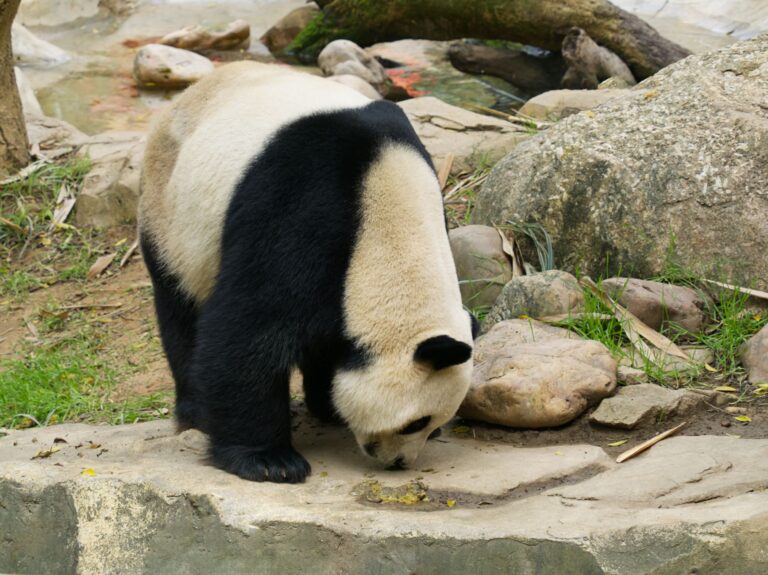
Giant Panda National Park is a single protected area in central China, formally established on 12 October 2021 by merging the country’s separate panda reserves into one administrative unit. It spans Sichuan, Shaanxi and Gansu and protects the large majority of the world’s wild giant pandas. This guide walks through what the park actually is, how it differs from a Western-style national park, why China built it, and what difference it makes for the pandas inside.
Key facts at a glance
| Total area | 27,134 km2 at establishment; Xinhua reporting in 2025 describes a 22,000 km2 park |
|---|---|
| Established | 12 October 2021, after a pilot from 2017 |
| Four sectors | Minshan and Qionglai-Daxiangling (Sichuan), Qinling (Shaanxi), Baishuijiang (Gansu) |
| Provincial split | Sichuan 20,177 km2 (74%), Shaanxi 4,386 km2 (16%), Gansu 2,571 km2 (9.5%) |
| Wild pandas protected | 1,631 (87.5% of the national total) at establishment; about 1,340 in 2025 reporting |
| Isolated subpopulations targeted | 33 |
| Corridors built by late 2025 | 6, connecting 13 previously isolated groups |
| Other species | More than 8,000 |
| Governance | Giant Panda National Park Administration, under the National Forestry and Grassland Administration |
What the park is and why it exists
The fragmentation problem the park solves
Before 2021, China protected its giant pandas through a patchwork of separate nature reserves run by the Sichuan, Shaanxi and Gansu provincial forestry departments. The reserves themselves were ecologically sound, but the landscape between them was carved up by roads, hydropower projects, mining and agriculture. The 2014 national survey found the wild population split into 33 local groups. Twenty-four of them hold fewer than 30 animals and 18 hold fewer than 10. Small isolated populations slide into inbreeding depression and disappear quietly.
The park’s core idea is unification. Bring the reserves under a single administrative roof, plan corridors between them, restrict the road and infrastructure expansion that fragmented the habitat in the first place, and let pandas move. It is the largest single conservation merge in modern Chinese environmental history.
2017 pilot, 2021 formal opening
The pilot phase began in 2017 when the State Council approved the concept as part of a wider national-parks reform. Four years of trial governance, boundary-drawing, ranger recruitment and infrastructure work led to the formal proclamation on 12 October 2021, alongside four other new national parks: Sanjiangyuan, Northeast China Tiger and Leopard, Hainan Tropical Rainforest and Wuyishan.
A note on the numbers
Official figures for the park’s size and panda coverage do not agree, which is worth knowing before you quote any of them. The Sichuan provincial announcement at establishment gives 27,134 square kilometres and 1,631 wild pandas, or 87.5 percent of the national total, drawn from the pilot area. Xinhua reporting in November 2025 describes a park of 22,000 square kilometres holding about 1,340 wild pandas, and says 73 previously isolated reserves were folded in. The commonly quoted figure of 67 reserves comes from the count at the time of the fourth national survey. The discrepancies come from boundary revisions and different ways of counting protected areas, not from any dispute about what the park is for.
Geography: four sectors, three provinces
Sichuan sectors
The Sichuan portion covers about 74 percent of the park and comes in two blocks: the Minshan sector (10,013 km2) and the Qionglai-Daxiangling sector (10,164 km2). This is core panda habitat, home to most of the wild population and most of the famous reserves, including Wolong, Tangjiahe, Wanglang and Caopo. Most of the park’s scientific staff and the bulk of the public-facing visitor zones sit on the Sichuan side.
Shaanxi sector
The Shaanxi portion (4,386 km2, about 16 percent) sits in the Qinling Mountains and protects the distinct Qinling subspecies, Ailuropoda melanoleuca qinlingensis, counted at 345 animals in the fourth national survey. The Qinling pandas have smaller, rounder skulls than the Sichuan population and are the only group that produces the rare brown-and-white colour form. Foping National Nature Reserve is the centrepiece.
Gansu sector
The Gansu portion (2,571 km2, around 9.5 percent) covers the northern edge of the Minshan range and is anchored on Baishuijiang Nature Reserve. The pandas here connect ecologically to the northern Sichuan population, and corridor work in this sector is some of the highest-priority habitat reconnection in the park.
Inside the park
Core protected zones
The park uses a core-zone and general-control-zone model rather than a single uniform restriction. Core zones are closed to development and have the strictest access rules; they cover the highest-quality panda habitat and key breeding areas. Visitor access into core zones is research-permit only.
General control zones
General control zones surround the core areas and allow regulated human activity: ecotourism, traditional agriculture, monitored grazing. This is where most residents live and where tourists can legally hike, stay overnight and enter visitor centres.
Human communities inside the park
Reporting around the park’s creation put the resident population inside the boundary at roughly 170,000 people. China’s approach has been to keep them in place but shift livelihoods towards conservation-compatible activities: ecotourism, beekeeping, mushroom and herb farming, ranger work. This is a deliberate departure from the historical Western model that empties national parks of residents. It brings its own trade-offs around enforcement and habitat pressure, but it reflects the reality of a populated mountain landscape.
The reserves that got merged
Wolong (1963, the original)
Wolong National Nature Reserve in the eastern Qionglai mountains was established in 1963 and greatly expanded in 1975. It is the founding institution of modern panda conservation, sits inside the national park, and continues to host the Shenshuping base. See our panda sanctuaries guide for a deeper walk through.
Foping (Qinling stronghold)
Foping, in southern Shaanxi, protects the densest concentration of pandas anywhere in China. The fourth national survey counted 67 pandas in its 292 square kilometres, or one panda per 4.36 square kilometres across the whole reserve. The official figure for its combined core and buffer zones is one per 1.5 square kilometres. Its scientific record on the Qinling subspecies is extensive.
Tangjiahe, Wanglang, Baishuijiang
The three other widely cited reserves are Tangjiahe in Sichuan (known also for takin and golden snub-nosed monkeys), Wanglang (established in 1965, research-heavy and tourist-light) and Baishuijiang (the Gansu anchor). Together with Wolong and Foping they cover the highest-priority habitat in the park.
Corridors between subpopulations
The 33 isolated wild groups
The 2014 national census identified 33 local populations, ranging from a few hundred animals in the strongest blocks down to fewer than 10 in the weakest 18. Several of the smallest groups were on a slow-motion extinction track. The park’s flagship intervention is corridor work: reforestation, underpasses where roads bisect habitat, and infrastructure restrictions on new development between key zones.
Reforestation and underpasses
Six corridors had been completed by late 2025, connecting 13 previously isolated panda groups, with the reconnection between Sichuan and Shaanxi the highest-profile project. Genetic connectivity at this scale takes decades to show up in DNA samples, but camera traps and ranger reports have already documented pandas moving through several of the corridors, and annual wild panda sightings in the Sichuan sector rose from 135 to 185 a year over the park’s first years.
How the park is run
National Forestry and Grassland Administration
Governance sits with the National Forestry and Grassland Administration in Beijing, with a dedicated Giant Panda National Park Administration running day-to-day operations. The three provincial governments retain regional administration roles, which adds complexity but reflects the multi-province footprint.
Ranger network and remote camera grid
Patrol work, anti-poaching and disease surveillance for the wild population are all the rangers’ remit. A dense remote camera grid covers the core zones, and the imagery feeds both the census work and the tracking of corridor movements between subgroups.
Local resident integration
One of the more interesting aspects of the park is its formal integration of resident communities into the operating model. Ranger jobs, beekeeping cooperatives, eco-guesthouses and panda-themed handicraft programmes keep people in the landscape on terms compatible with conservation goals. The model is still maturing and not all communities benefit equally.
Other species the park protects
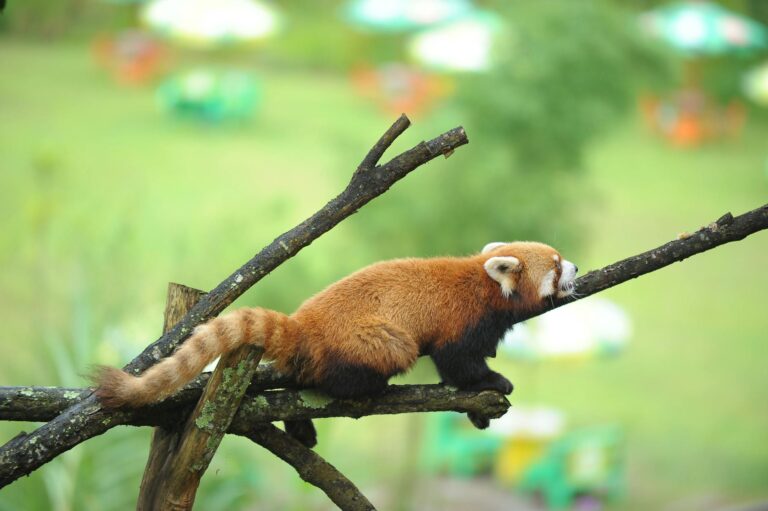
Giant pandas are the umbrella species, but the park shelters more than 8,000 other rare animal and plant species. The headliners include snow leopards, takin, golden snub-nosed monkey, red panda, Asiatic black bear, clouded leopard, blood pheasant and Sichuan partridge. For one comparison piece, see our work on the red panda, which shares much of this habitat.
How to visit
Open visitor zones
Visitor access concentrates on a small number of general control zone areas. Wolong (the Shenshuping centre and the public-facing scenic spots), Foping’s buffer trails, parts of Tangjiahe and the eastern flank of Baishuijiang are the main openly accessible areas. Tickets and routing run through provincial tourism authorities and the breeding centres’ own public information channels.
Permits and seasons
April to May and September to October are the best windows. Core zone permits for researchers and journalists are issued through the park administration; tourist day passes for general control zones are sold through regional visitor centres. Wild panda sightings inside the park are rare for the same reason they are rare anywhere: pandas are dispersed, secretive and live deep in bamboo forest. Plan a trip around the landscape, the ranger talks and the captive bases like Dujiangyan and Bifengxia rather than around a hoped-for wild sighting.
For more context on how the species got into needing this kind of intervention, see our piece on how the giant panda became endangered, the broader conservation effort, the status update in are giant pandas now safe from extinction, and the habitat backstory in giant panda habitat.
Panda merchandise
Browse panda-themed panda home decor and gear at our store, store.welovepandas.org.
Frequently asked questions
When was Giant Panda National Park created?
Officially established on 12 October 2021, alongside four other Chinese national parks. The pilot phase ran from 2017 and involved four years of trial governance, boundary work, ranger recruitment and infrastructure planning.
How big is the park?
The establishment figure is 27,134 square kilometres, roughly three times the size of Yellowstone. More recent Chinese state reporting describes a 22,000 square kilometre park after later boundary work. Either way the footprint spans three provinces.
How many pandas does it protect?
Published figures range from about 1,340 to 1,631 wild giant pandas depending on the source and the boundary used, against a national total of 1,864 at the last full census. The rest of the wild population lives in scattered habitat outside the park, mostly in smaller provincial reserves.
Why merge the reserves into one park?
To unify management, plan corridors between previously isolated subpopulations, and restrict the road and infrastructure projects that had fragmented panda habitat across decades. The old reserves were individually well run but uncoordinated; the merge gives China a single body that can plan and enforce at landscape scale.
Can tourists visit Giant Panda National Park?
Yes, but only inside designated general control zones. Wolong, Foping, parts of Tangjiahe and the eastern flank of Baishuijiang are the most accessible. Core zones are research-permit only, and wild sightings are rare even in the open zones.
What other animals live in the park?
More than 8,000 other species. Headliners include snow leopards, takin, golden snub-nosed monkeys, red pandas, Asiatic black bears, clouded leopards, blood pheasants and Sichuan partridge.
Are people still living inside the park?
Yes, on the order of 170,000 by the counts reported when the park was created. China’s approach is to keep people in place but shift livelihoods towards ranger work, ecotourism, beekeeping, herb farming and eco-guesthouses.
Is the park working?
Too early for definitive trends, because genetic connectivity between isolated groups takes a generation to register in DNA samples. The short-term operational signs are good: six corridors built, 13 previously isolated groups reconnected, and rising sighting rates in the Sichuan sector.
Sources and further reading
- UNESCO: Sichuan Giant Panda Sanctuaries
- WWF: giant panda
- IUCN Red List: giant panda
- Science Advances: landscape-scale giant panda conservation within China’s national park system
Last updated 27 July 2026.
Updated 14 September 2026: corrected factual details after a full review against primary sources.



Three times Yellowstone is the scale that makes you stop and re-read. Most readers do not realise China just dropped the largest panda-focused conservation area in human history in under five years.
130,000 residents inside the park boundaries is the part I keep coming back to. Western national-park rules would never allow that, and yet it might be the model that actually works in China.
Genuine question: how do the 33 subpopulation corridors actually get built? Are they physical land bridges, removed roads, or reforestation strips?
Henrik, a mix. Some are reforested farmland strips (with displaced villagers compensated and relocated), some are tunneled or removed sections of the original G108 highway, and a few are tree-planted overpasses. The cheapest and most common is just acquiring private forest leases and stopping the logging in those corridor strips.