
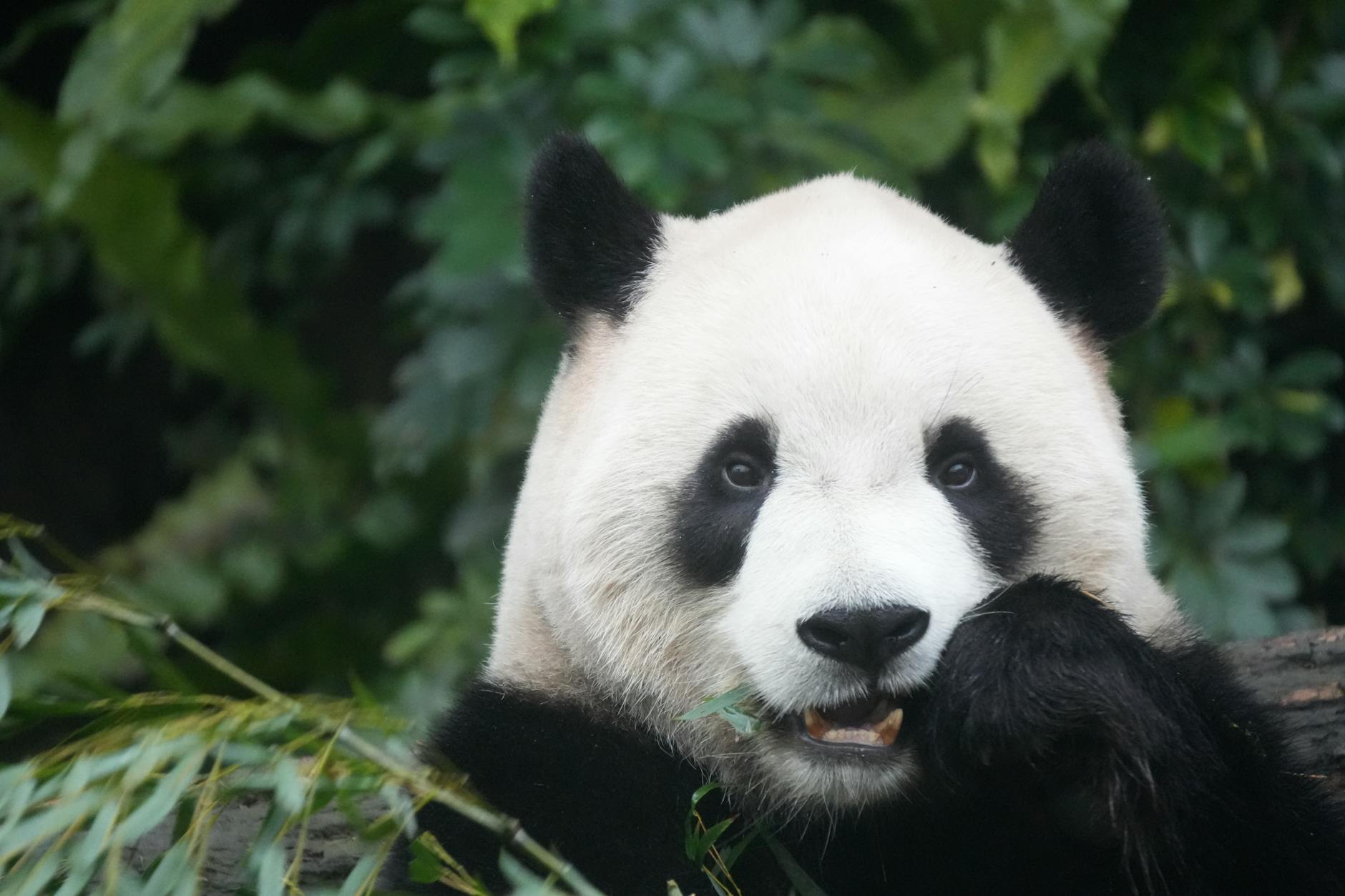
10 Of The Most Famous Giant Pandas Worldwide
Last updated: November 5, 2026
5 min read
A handful of giant pandas have become properly famous: the one that became a logo, the one that was the first to reach the West, the one that bit three people at Beijing Zoo. This list is ten of them, checked and dated, because panda articles go stale fast. Pandas are loaned, returned and, eventually, die, and a lot of what is written about them online is describing a world that no longer exists.
Everything below is current as of July 2026.
1. Su Lin, the first live panda in the West
Ruth Harkness brought a panda cub out of China in 1936 and sold it to Brookfield Zoo, outside Chicago, in April 1937. She named the cub Su Lin and believed it was female. It was not: Su Lin was a male. The public response was extraordinary. Roughly 325,000 people came in the first three months, and one Sunday brought more than 53,000 visitors through the gate. Shirley Temple, Helen Keller, John Barrymore and Kermit Roosevelt were among them. Su Lin died of pneumonia in 1938, and the preserved body is still at the Field Museum in Chicago.
2. Chi-Chi, the panda who became a logo
Chi-Chi arrived at London Zoo in 1958 and stayed until her death in 1972. In 1961 the founders of the new World Wildlife Fund wanted an animal that would print cleanly in black and white, and Peter Scott drew the logo from her. She is also the reason for one of the odder episodes in panda history: London flew her to Moscow Zoo in 1966 in the hope she would breed with the male An An. Nothing happened, in either direction, and the failed courtship helped fix the popular idea that pandas are hopeless at reproducing.
3. Ling-Ling and Hsing-Hsing, the Nixon pandas
China gave the United States two pandas after Nixon’s 1972 visit, and Ling-Ling and Hsing-Hsing arrived at the Smithsonian National Zoo that April. They were genuine gifts. China ended state gifts in 1982, used short exhibitions from 1984 and began modern long-term scientific cooperation in 1994. The pair drew enormous crowds for two decades. Ling-Ling died in 1992 and Hsing-Hsing in 1999.
4. Basi, the mascot model
Basi was born wild in Sichuan in 1980 and pulled out of a frozen river as a young animal. She spent the rest of her life at what is now Fuzhou Panda World in Fujian. She was the model for Pan Pan, the mascot of the 1990 Beijing Asian Games, and was the first panda to be given cataract surgery and the first diagnosed with high blood pressure. She died on 13 September 2017, aged 37, of old age, liver cirrhosis and kidney failure. Articles calling her the world’s oldest living panda are nine years out of date.
5. Xinxing, the matriarch
Xinxing was born wild in Baoxing County, Sichuan, in 1982 and brought to Chongqing Zoo as a cub. She died there on 8 December 2020 at 38, which ties the record for the oldest giant panda in captivity. By the end she had more than 150 descendants across several generations, the largest family line in the species.
6. Jia Jia, the other record holder
Jia Jia arrived at Ocean Park in Hong Kong in 1999 and lived there until October 2016, when vets euthanised her at 38 after her kidneys failed. She held the Guinness record for the oldest panda in captivity until Xinxing matched it. Her long-time companion An An lived at Ocean Park until July 2022 and died at 35, the oldest male on record.
7. Xin Xin, the only panda China does not own
Xin Xin was born at Chapultepec Zoo in Mexico City on 1 July 1990, conceived naturally by the female Tohui and the male Chia Chia, who had arrived from London Zoo. Mexico received its founding pandas as gifts before the loan system started, which is why Xin Xin belongs to Mexico rather than to China. She is the last of Mexico’s eleven pandas, the only giant panda in Latin America, and the oldest panda living outside China. She can be seen at Chapultepec at no extra charge.
8. Hua Mei, the first American cub to grow up
Hua Mei was born at San Diego Zoo on 21 August 1999 to Bai Yun and Shi Shi, and was the first giant panda cub born in the United States to survive to adulthood. She went to China in 2004 and now lives at the Bifengxia base near Ya’an, where she has become one of the most productive mothers in the captive programme, including three sets of twins between 2004 and 2007.
9. Tai Shan, the Washington cub
Tai Shan was born at the Smithsonian National Zoo on 9 July 2005, the first cub there to survive more than a few days, and the first for Mei Xiang and Tian Tian. Animal Planet followed his first year for the documentary Baby Panda’s First Year, and the crowds outside his enclosure became a Washington fixture. He moved to China in February 2010 under the terms of the loan, which require cubs to be returned.
10. Gu Gu, the panda who bit back
Gu Gu was born at the Wolong reserve on 25 September 1999 and lived at Beijing Zoo, where he became famous for what happened to people who climbed into his enclosure. He bit a drunk man who tried to hug him in 2006, a teenager who jumped the barrier in 2007, and a man who fell in chasing his son’s toy in 2009. He is the strongest argument on this list against the idea that pandas are soft toys. Gu Gu died on 16 January 2025, aged 25.
Where the other famous ones went
Several pandas that older articles describe as living in Western zoos have gone home. Lun Lun and Yang Yang, the Zoo Atlanta pair, flew to Chengdu with their two daughters in October 2024 when the agreement expired. Tian Tian and Yang Guang left Edinburgh Zoo in December 2023 at the end of a loan that cost the zoo around 640,000 pounds a year. Da Mao and Er Shun, Canada’s pandas, returned in November 2020 after pandemic air freight made their bamboo supply unreliable, and their Toronto-born twins had gone back that January. Mei Sheng, born at San Diego in 2003, has lived at Bifengxia since 2007; his name, 美生, can be read as “born in the USA”.
And one recent arrival closes a loop. Bao Bao was born at the Smithsonian National Zoo on 23 August 2013 to Mei Xiang and Tian Tian, and returned to China in February 2017. In 2021 she had twin sons at Wolong. One of them, Bao Li, came to Washington in October 2024 and now lives in the enclosure his mother was born in.
Panda merchandise
Browse panda-themed panda plushies and gear at our store, store.welovepandas.org.
Sources
- Smithsonian National Zoo: giant pandas
- Zoo Atlanta: the pandas arrive in China (2024)
- Field Museum, Chicago (Su Lin)
- Ocean Park Hong Kong (Jia Jia and An An)
If we have a date wrong, or a panda on this list has moved since we last checked, tell us in the comments and we will fix it.
This article is part of our giant panda guide, which links every species, evolution and zoo article on the site.
Updated 14 September 2026: corrected the panda-loan timeline after review against primary sources.




Basi at 37 lifting weights and shooting hoops is wild but also kind of sad. Modern enrichment guidelines have moved well past performance-style training. Worth a note in the next refresh.
Gu Gu attacking visitors is the panda version of the bull-shark public-image problem. He is just being a bear in his enclosure and the visitors keep climbing in.
Bai Yun and Gao Gao were such a big deal for San Diego back in the day. The whole city went into mourning when they went back to Sichuan. Mei Sheng deserves the famous-panda list spot.
Was hoping to see Hua Hua on this list. Her viral popularity in 2023 dwarfed almost everyone on this page. Update candidate?
David, yes Hua Hua is on the refresh list. The 2026 update will replace at least two of the older entries with Hua Hua and Bei Bei. The internet has spoken.