
Which Bamboo Species Do Pandas Actually Eat?
Last updated: November 5, 2026
3 min read
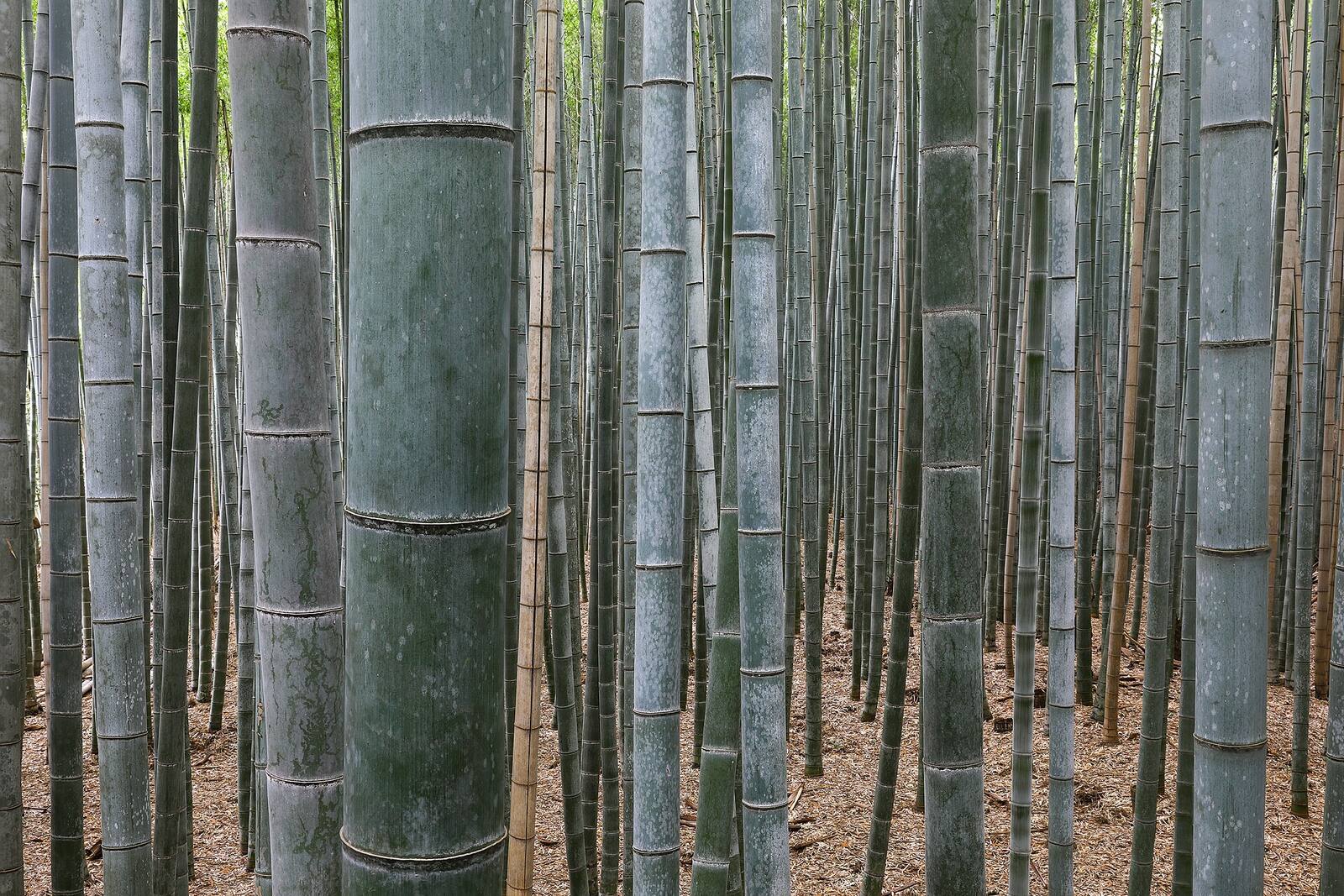
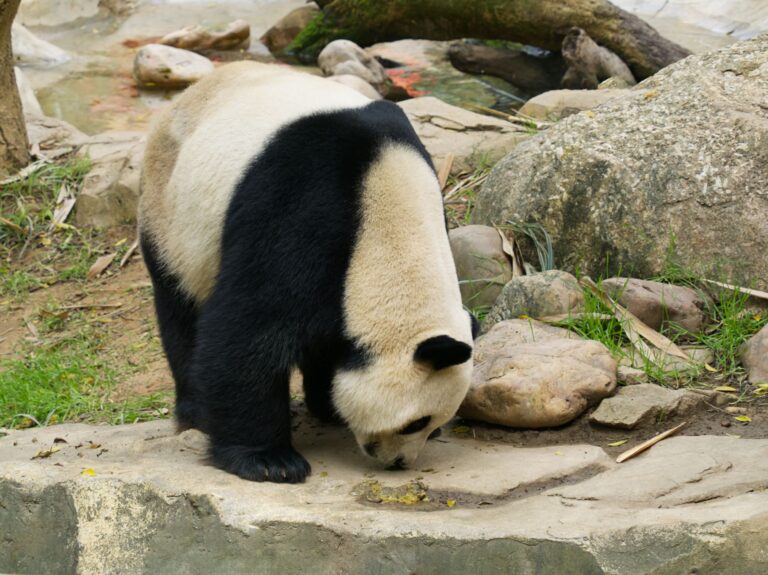
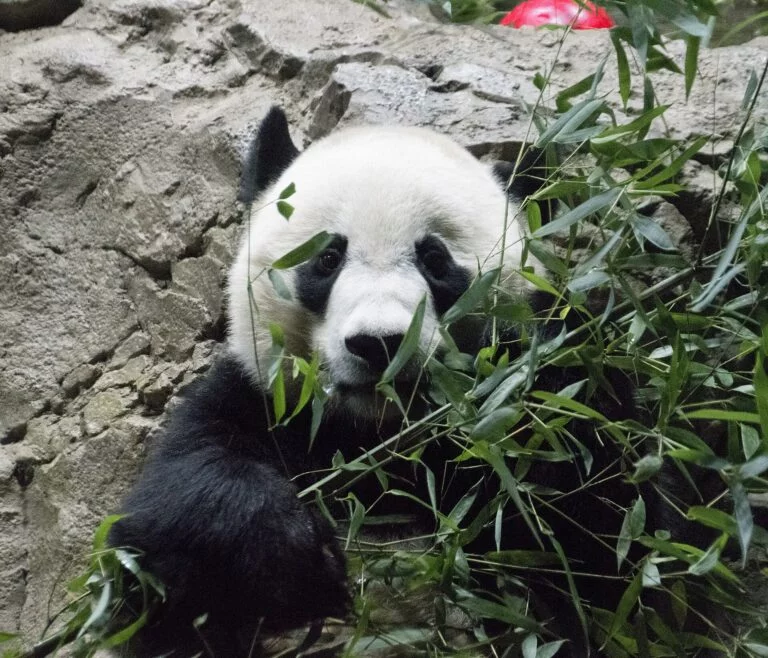
Giant pandas eat more than 40 species of bamboo across their range. The dominant genera are Bashania, Fargesia and Yushania, but pandas switch species seasonally, follow new shoots uphill in spring, and fall back on tough older canes in winter. The diet is not one bamboo. It is a calendar.
Key facts
| Number of bamboo species eaten | More than 40 documented |
|---|---|
| Top three genera | Bashania, Fargesia, Yushania |
| Daily intake | About 12 to 38 kg for an adult |
| Measured energy digestibility | 9.2 to 34.0 percent in captive bamboo-only trials |
| Shoot vs cane preference | Shoots in spring, leaves in summer, canes year round |
| Mass-flowering events | Every few decades to a century, and catastrophic |
The dominant genera
Three bamboo genera carry most of the panda diet across the species range, and which one you are looking at depends entirely on where you are standing.
In the Qinling Mountains of Shaanxi, the diet is essentially two species stacked by height: Bashania fargesii from about 1,000 to 1,900 metres, and Fargesia qinlingensis from about 1,800 to 2,700 metres. Pandas there spend winter low among the Bashania and climb into the Fargesia for summer.
In the Min and Qionglai ranges of Sichuan, Fargesia species dominate, including Fargesia denudata and Fargesia robusta. Further south in the Liang Mountains, Yushania takes over: Yushania maculata and Yushania ailuropodina are the winter and spring staples at lower elevations, with pandas moving up to Bashania in the summer months.
Each genus differs slightly in fibre, nutrient and silica content, so pandas in different regions show subtly different tooth wear. The giant panda genome, published in 2010, showed the same digestive limitation across the species. What varies is the local menu, not the machinery.
The seasonal switch from shoots to canes
Spring is shoot season. New shoots are tender, packed with starch and protein, and a panda can put on weight quickly while they last. Shoot eating drives the densest panda movement of the year, with animals ranging widely to follow emergence up the slope.
Summer and autumn shift to leaves. Leaves are higher in protein than canes but lower than shoots, and a wild panda will eat selectively, stripping the more nutritious species and ignoring older, woodier material.
Winter forces a switch to canes. Canes are tough, low in calories and require heavy chewing. Pandas in winter spend more hours feeding, less time travelling, and drop to lower elevations where the canes are thicker and easier to reach.
Mass flowering and population crashes
Most bamboo species mass-flower on long cycles, then die back across a whole population at once. Regeneration takes years. For a panda population dependent on one or two species, that is a famine with a decade-long tail.
It has happened twice in living memory. Arrow bamboo died back across the Min Mountains in the mid 1970s, and again across Wolong and the wider Qionglai range from 1983, with the Wolong panda population possibly halving. Chinese surveys recovered the remains of well over 200 pandas across both events. WWF had already begun working with the Chinese Ministry of Forestry at Wolong in 1980, but it was the second die-off that turned panda conservation into a global campaign. Modern reserves are planned around bamboo diversity precisely to spread this risk.
Why pandas need so much bamboo
Measured energy digestibility varies widely with the bamboo parts eaten. Captive bamboo-only trials found values from 9.2 to 34.0 percent. The rest passes straight through. The gut is short and carnivore-style, with no rumen and none of the specialist fermenters a cow relies on. The result is enormous daily intake, with adults eating roughly 12 to 38 kg a day.
This is also why bamboo loss is so dangerous. A specialist that needs tens of kilograms of food a day has no easy substitute. The story of how the panda got stuck on bamboo is in our piece on how pandas became bamboo dependent.
Related reading on welovepandas
- How pandas became bamboo dependent
- Species Profile: The Giant Panda
- Giant panda habitat under pressure
- Natural predators of giant pandas
- 5 panda sanctuaries to see
Sources and further reading
This article is part of our Giant Panda guide hub.
Frequently asked questions
How many bamboo species do pandas eat?
More than 40 documented species across the six mountain ranges, though only a handful matter in any one place.
What is a panda’s favourite bamboo?
There is no single favourite. The dominant species varies by region: Bashania and Fargesia in Qinling, Fargesia in the Min and Qionglai ranges, Yushania in the Liang Mountains.
How much bamboo does a panda eat per day?
An adult eats roughly 12 to 38 kg a day. The amount and bamboo parts selected vary by animal and season.
What is mass flowering?
Most bamboo species flower on very long cycles and then die. A mass flowering removes the food supply across a whole area for years and can starve local panda populations.
Do red pandas eat the same bamboo?
There is overlap in Bashania and Fargesia, but red pandas concentrate on leaves and tender growth rather than canes, which suits a much smaller animal.
Updated 14 September 2026: corrected factual details after a full review against primary sources.




the 1975-76 arrow bamboo flowering killing 138 pandas is one of those stats that hits harder when you put it next to the total population. that is a real chunk of the species gone from one synchronised botanical event.
Is the upper estimate of 40 species (the one mentioned in the FAQ) mostly trace consumption that shows up in scat once or twice and gets counted, or are there really another 15 species that pandas eat with any regularity? Big gap between 25 and 40 if it is real diet.
Henrik, mostly the former. The 40 figure includes species that have shown up in faecal analysis at trace levels, sometimes a single record. The 25 species count is what would qualify as regular, seasonally consistent diet. So you are right to be skeptical of the upper number as a real dietary breadth claim. I will tighten that wording in the FAQ.
the silica content point on different teeth wear patterns by region is the kind of thing i never would have thought of. fargesia in min versus bashania in qinling actually leaves a visible signature on the molars over a panda’s lifetime. wild.