
Do Pandas Hibernate? Why Giant Pandas Stay Awake All Winter
Last updated: November 5, 2026
7 min read
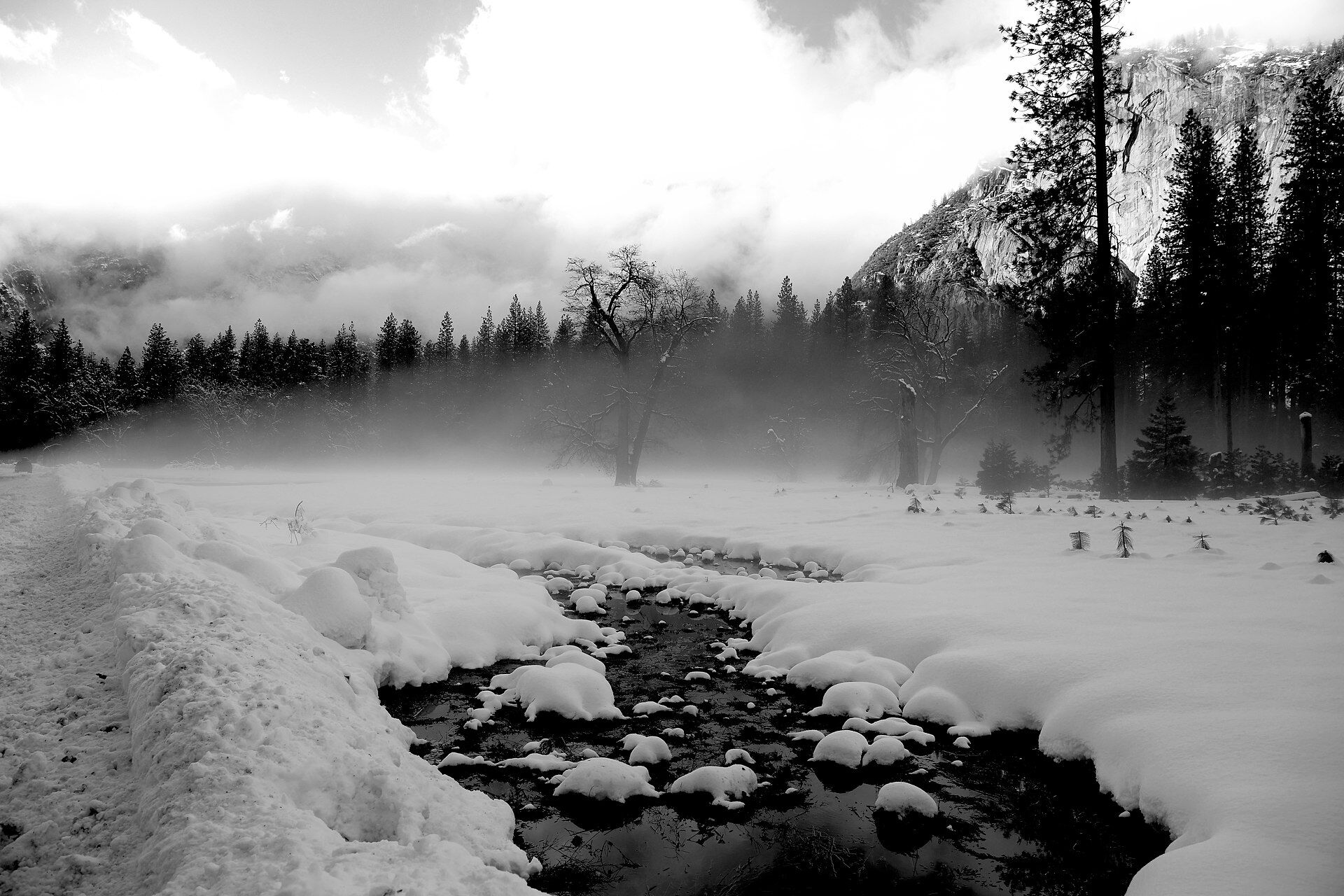
No. Giant pandas do not hibernate, despite living high in cold central Chinese mountains where snow falls every winter. Bamboo, their near-exclusive food source, is available year-round in their habitat. They have no need to live off stored fat over a long fast, so hibernation was never selected for in this species. The three tropical bears skip hibernation too, but they live where winter barely happens. The panda is the odd one out: a cold-mountain bear that stays awake all winter anyway. Here is why.
Key facts at a glance
- Do giant pandas hibernate? No
- Other bears that do not hibernate: sun bear, sloth bear, spectacled bear (all tropical or subtropical)
- Wild habitat altitude: roughly 1,200 to 3,400 m
- Winter strategy: descend to lower bamboo, eat continuously, conserve heat
- Fur: oily outer coat plus dense woolly underfur
- Daily bamboo intake: roughly 12 to 38 kg for an adult, with seasonal variation
- Daily feeding hours: 10 to 16, all year
- Body temperature: around 36 to 37 degrees C year-round
- Red panda strategy: daily torpor on cold days, not true hibernation
- Brown and American black bear strategy: true torpor for months at a time
The short answer
No, not in any sense
Hibernation in bears is more precisely called torpor: a multi-month state where heart rate, body temperature and metabolic rate all drop, the animal stops eating, drinking, urinating and defecating, and it lives off stored body fat. Giant pandas do none of this. Their body temperature stays around 36 to 37 degrees C year-round, they keep eating bamboo every day, and they are active for 10 to 16 hours daily in winter just as in summer. There is no panda equivalent of a denning brown bear.
Active all year
Field observations and remote camera footage from Wolong, Foping and Tangjiahe show pandas using the winter months to descend to lower-altitude bamboo stands where snow cover is thinner. They are not slowed down in any meaningful way. Cool air suits an animal carrying a thick double coat, and pandas will range a long way in pursuit of fresh culms.
Why pandas evolved away from hibernation
Bamboo is available year-round
The whole point of bear hibernation is to survive a long stretch with no food. Brown bears in temperate North America face months without ripe berries, salmon or carrion, and northern black bears face longer. Giant pandas face neither problem, because bamboo persists through the winter in their habitat. Even in deep winter at high altitude, bamboo culms remain edible under snow. A panda’s food clock never runs out.
A low-energy diet means no winter reserves anyway
Bamboo’s low energy density makes it hard to accumulate the large reserves needed for a long fast, although pandas can store and use fat. They compensate with continuous, high-volume feeding.
Altitude shift instead of seasonal shutdown
Where temperate bears hibernate to handle the cold, pandas migrate altitudinally. They spend the warm months high up where summer bamboo is fresh, then descend to lower ground in winter where snow cover is lighter and lower-altitude bamboo remains accessible. This vertical migration replaces the seasonal sleep cycle other bears use.
How pandas survive cold winters
Dense double-layered fur
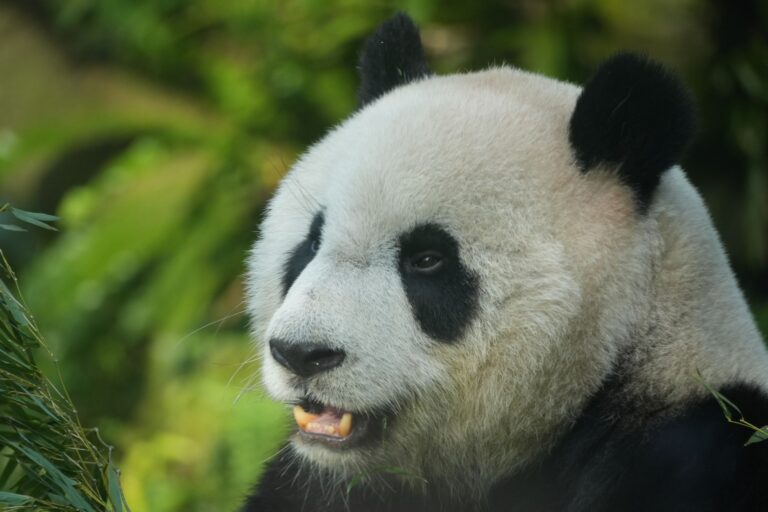
The panda coat is the species’ signature cold-weather adaptation. The outer guard hairs are coarse and slightly oily, shedding snow and rain effectively. The underfur is dense, woolly, and very effective insulation. Heat loss is minimal even at sub-zero temperatures, which is why a panda can keep eating outside while the snow falls without burning energy on shivering.
An unusually low energy budget
Giant pandas run at a remarkably low energy expenditure for a bear of their size. A 2015 study in Science measured daily energy expenditure across captive and wild pandas and found it averaged about 38 percent of what a terrestrial mammal of the same body mass would be predicted to use. Wild pandas came out higher, around 45 percent of expectation, but still far below par. The researchers linked it to reduced organ sizes, low physical activity and unusually low circulating thyroid hormone. The trade-off is that a panda generates less internal heat than other bears, so the thick coat does much of the thermoregulation work.
Seasonal altitudinal migration
The summer-to-winter elevation drop is one of the most consistent behavioural patterns in the species. Pandas at Foping, Wolong and across the Sichuan reserves all show the same descent into the lower forest belt as the snowline pushes down, and the pattern reverses in spring.
Which bears actually hibernate
For comparison, here is the rest of the bear family on the hibernation question. For wider context on how pandas differ from other bears, see our piece on the unique differences between giant pandas and other bears.
Brown bear (Ursus arctos): true torpor
Brown bears across Eurasia and North America enter true torpor for several months, with the exact length depending on latitude and food. Body temperature drops a few degrees, heart rate falls sharply, and they live off accumulated body fat. Pregnant females give birth and nurse cubs inside the winter den.
American black bear (Ursus americanus): true torpor
Northern American black bears hibernate for the longest stretches of any bear, up to around seven months in the far north. Southern populations may den for only a few weeks, or not at all in mild winters. They share the same general physiology as brown bears.
Asiatic black bear (Ursus thibetanus): partial torpor
Asiatic black bears hibernate in the colder northern parts of their range, including the Russian Far East, northern Japan and northern China, but skip it in the warmer south. The species sits right on the threshold where hibernation becomes optional.
Polar bear (Ursus maritimus): only pregnant females
Only pregnant polar bear females den, and they den specifically to give birth to and nurse cubs through the harshest part of winter. Adult males and non-pregnant females stay active and hunt seals on the sea ice year-round. This is maternal denning, not classical hibernation.
Sun bear, sloth bear, spectacled bear: no hibernation
The three tropical and subtropical bears have no hibernation because their habitats have no winter food crash. Same logic as the panda: if food never runs out, hibernation never evolves.
Misconception: pandas slow down in winter
Slight reduction, no shutdown
A common confusion is that pandas slow down significantly in winter and are therefore somehow hibernating. They do rest more in sheltered spots between feeding bouts in the coldest weather, and their daily ranging shortens, but there is no metabolic shutdown of any kind. They still feed 10 to 16 hours a day, every day, throughout winter.
Maternal denning is not hibernation
Pregnant or new-mother pandas do retreat into a hollow tree or a cave to give birth and nurse cubs through the first few weeks. This is maternal denning, not hibernation: the mother is alert, lactating and actively caring for the cub the entire time. She leaves the den briefly to drink and resumes feeding trips as the cub develops. The metabolic state is normal mammalian motherhood, not torpor.
Red pandas: short torpor episodes
The red panda, a separate species not closely related to the giant panda, does have a partial cold-weather strategy. On cold days red pandas can briefly reduce their metabolic rate without lowering core body temperature. Their curled posture and fur reduce heat loss. This is not multi-month hibernation, just a brief energy-saving move on the coldest mornings. For more on how red pandas differ from giant pandas, see our red panda species profile and our piece on why red pandas matter.
For more background on why pandas became so tied to bamboo, and therefore so unable to hibernate, see our piece on how pandas became bamboo dependent, and our walk through the wider giant panda habitat.
Panda merchandise
Browse panda-themed panda books and gear at our store, store.welovepandas.org.
Read next
- Panda Facts: 50+ Surprising Things About Giant Pandas and Red Pandas (2026)
- The Panda Mating Dance: How Giant Pandas Find a Partner
- What Are The Actual Costs And Conditions For Renting Giant Pandas?
Frequently asked questions
Do giant pandas hibernate?
No. Giant pandas are active year-round and never enter the kind of multi-month torpor that brown bears and American black bears use. Their body temperature stays around 36 to 37 degrees C all winter and they keep eating bamboo every day.
Why do pandas not hibernate when other bears do?
Their food source is available year-round in their habitat, so there is no winter food crash to survive. Their low-energy bamboo diet also makes it impossible to build the heavy body-fat reserves that hibernation requires. Evolution selected for continuous low-volume feeding instead of seasonal shutdown.
What do pandas do in winter?
They keep eating. Pandas descend from their high-altitude summer range to lower winter ground where snow cover is lighter and bamboo is easier to reach. They feed 10 to 16 hours a day all year and travel between bamboo stands as needed.
Are pandas slower in winter?
Only marginally. They rest more between feeding bouts in the coldest weather and range shorter distances, but they still feed for 10 to 16 hours daily and there is no drop in body temperature or metabolic rate.
Do red pandas hibernate?
Not full hibernation. Red pandas can enter daily torpor: a few hours of reduced metabolism and lowered body temperature on the coldest winter days. They curl into a tight ball with the tail wrapped over the head to conserve heat. This is a short-term energy-saving strategy, not the multi-month torpor of true hibernating bears.
Do female pandas den when giving birth?
Yes, but it is maternal denning, not hibernation. Pregnant pandas retreat to a hollow tree or a cave to give birth and care for the helpless cub for several weeks. The mother is fully alert, lactating and active inside the den. The metabolic state is normal.
Which bears hibernate the longest?
American black bears in the far north, which can stay in torpor for around seven months. Brown bears den for several months depending on latitude. Asiatic black bears hibernate only in the colder parts of their range. The three tropical bear species do not hibernate at all, and neither does the giant panda.
Why are pandas so well insulated if they do not hibernate?
Because they are eating outside in cold weather instead of sleeping through it. The double-layered fur reduces heat loss while they continue foraging at low temperatures, and it compensates for the species’ unusually low energy expenditure, which generates less internal heat than other bears of similar size.
Sources and further reading
- IUCN Red List: giant panda
- WWF: giant panda species page
- Smithsonian National Zoo: giant panda
- IUCN SSC Bear Specialist Group
- Nie et al., “Exceptionally low daily energy expenditure in the bamboo-eating giant panda”, Science, 2015
Updated 14 September 2026: corrected factual details after a full review against primary sources.


The framing of bamboo as year-round food is the cleanest way to explain why pandas never evolved hibernation. The textbook answer is metabolic but the food-availability lens is more intuitive.
Did not realise the tropical bears (sun, sloth, spectacled) also do not hibernate. The standard hibernating-bear archetype really is just brown and black bears.
The red panda torpor mention is interesting. They do drop core temperature on cold days but stay awake. Is that strictly speaking torpor or just thermoregulation slack? The terminology gets fuzzy.
Yuyu, you are right that the terminology is fuzzy. The strict definition is daily torpor: a controlled drop in metabolic rate and body temperature for a few hours, distinct from circadian rest. Red pandas qualify under that definition, but it is daily torpor not multi-month hibernation.