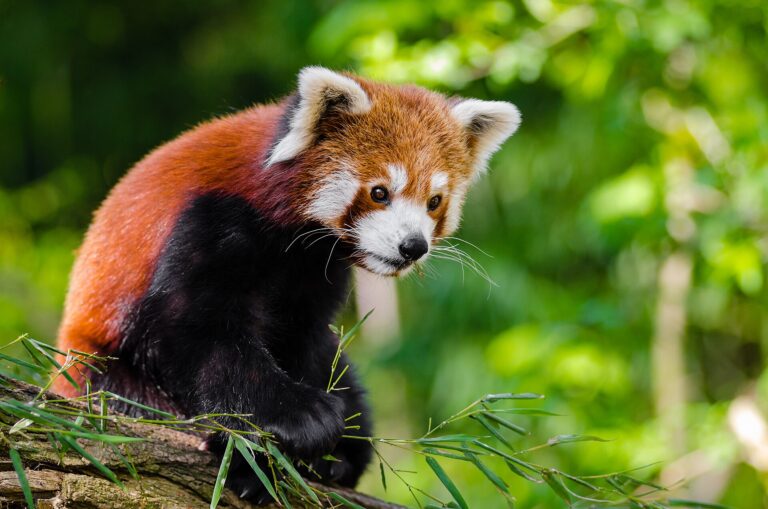
Red Panda Cubs: Birth, Den Life and Weaning Explained
5 min read
A newborn red panda weighs about as much as a bar of soap. The Smithsonian’s National Zoo gives the weight of a newborn Ailurus fulgens fulgens as 3 to 4 ounces, or about 90 to 110 grams. From that start, the cub has to grow into an animal that climbs thin branches, eats bamboo and lives alone for most of its life.
This post follows the cub from the den to independence, using what zoo biologists and one recent genetics study report. Wild cubs are hard to watch, so much of the detail comes from zoos, and the post says where that limits what we know.
Before the birth: a long, flexible pregnancy
Red pandas breed in winter and early spring. San Diego Zoo Wildlife Alliance gives the breeding season as January through April, and says a female is fertile for only one or two days a year.
Pregnancy is not a fixed length. The National Zoo says gestation appears to include delayed implantation, and may be as short as 93 days or as long as 156 days. San Diego gives a range of 98 to 145 days. The two ranges differ a little, which is a fair sign that nobody has pinned the number down. Giant pandas also delay implantation, and our post on panda pregnancy and delayed implantation covers how that works in the bigger species.
Both zoos offer a reason for the long gestation. San Diego says the delay may ensure that cubs are born in summer, when their chances of survival are best. The National Zoo says reproduction costs a great deal of energy, so a long gestation may be a result of a slow metabolic rate, and adds that late spring births coincide with the most tender bamboo shoots and leaves. Both statements are hedged in the sources, and they are best read as likely explanations rather than settled facts.
The den and the first days
A few days before the birth, the mother builds a den. San Diego describes a hollow tree, a stump or a rock crevice, lined with twigs, leaves, grass, moss and small branches. The National Zoo lists tree holes, hollow stumps, tree roots or bamboo thickets, lined with moss, leaves and other soft plant material.
Litters typically hold two cubs, born between May and July in the Northern Hemisphere according to the National Zoo. San Diego gives the number born as 1 to 4, usually 2.
The cubs arrive well prepared for the cold in one way and unprepared in others:
- The National Zoo says they are born completely covered in fur. San Diego describes thick buff and gray fur.
- Their eyes and ears are tightly closed, so the den does the protecting.
- The soles of the newborn’s feet are bare. As an adult the feet are covered with hair, which San Diego links to climbing wet, slippery branches and walking on ice or snow.
For the first 7 to 10 days, San Diego says the cubs’ only activity is nursing. A hungry cub calls with a high-pitched whistle, which the National Zoo also lists as the distress call of young cubs. Adults sound different. The complete red panda species guide has more on how adults sound and behave.
Weeks two to twelve: eyes, play and first bamboo
The timeline below uses San Diego’s figures:
- Two to three weeks: eyes and ears begin to open.
- 40 to 50 days: cubs actively explore the den, groom and play.
- About three months: cubs venture out of the den.
- Four months: regular solid food. Cubs chew on bamboo twigs the mother brings to the den before that, but do not eat solid food regularly until about four months old.
- 13 to 22 weeks: nursing ends. The wooly gray hair changes to red around this time.
- Five months: cubs are almost as large as their mother.
The mother does not stay in one place. San Diego says she shelters her young in tree hollows and regularly moves them to new dens, carrying each one in her mouth. The sources do not say why she moves them, and I would not guess.
Males rarely help with raising the young, according to San Diego, so the work of milk, warmth and moving house falls on the mother.
The switch from milk to bamboo
The hardest change for a red panda cub is the food. A 2025 study in BMC Genomics notes that red pandas, like giant pandas, move from highly nutritious mother’s milk to a diet of low-nutrient, high-fiber bamboo after weaning. The researchers looked at DNA methylation, a chemical tag that helps control how active a gene is, in the liver and pancreas at different life stages.
Their reading of the data is that many lipid-metabolism genes are switched on during suckling, which gives the energy for the rapid growth of young cubs. After weaning, energy metabolism changes significantly as the diet shifts from high-fat milk to high-fiber, low-fat bamboo. The paper also says adult red pandas store and use vitamin A efficiently, even though bamboo has less of it than milk.
This study links methylation changes to the diet switch. It reports an association and does not show that the tags cause the switch. It is also a single study, so treat it as a first look rather than a final answer. What adults eat once the switch is done is covered in what red pandas eat.
Growing up and leaving
The tail changes along the way. San Diego says the short, fat tail of the baby becomes ringed and grows to be almost as long as the body, and that the long tail helps an adult keep its balance in the trees. Our post on the red panda tail goes deeper on that.
Red pandas mature in 18 to 20 months, says San Diego, and at that age the mother drives them away so she can prepare for her next litter. Life as a young adult in the wild is not covered by the zoo sources, and I did not find a source I could rely on for how far young animals travel or how many survive.
What is still not known
Most of the numbers above come from zoo-born cubs. Ranges such as 93 to 156 days for gestation and 13 to 22 weeks for nursing show that the data are loose. The wild denning period, the survival rate of wild cubs and the reasons for den moves are not given in the sources I read, so I have left them out. If you have seen wild cubs, I would like to hear it.
Zoo breeding has a long record. The National Zoo says it has had more than 100 surviving cubs born since 1962.
Have you seen a red panda cub in a zoo or in the wild? Add what you saw in the comments.
Sources
- Smithsonian’s National Zoo and Conservation Biology Institute, Red Panda
- San Diego Zoo Wildlife Alliance, Red Panda
- Chen et al., BMC Genomics 2025, DNA methylation in red pandas during the transition from milk to bamboo diet
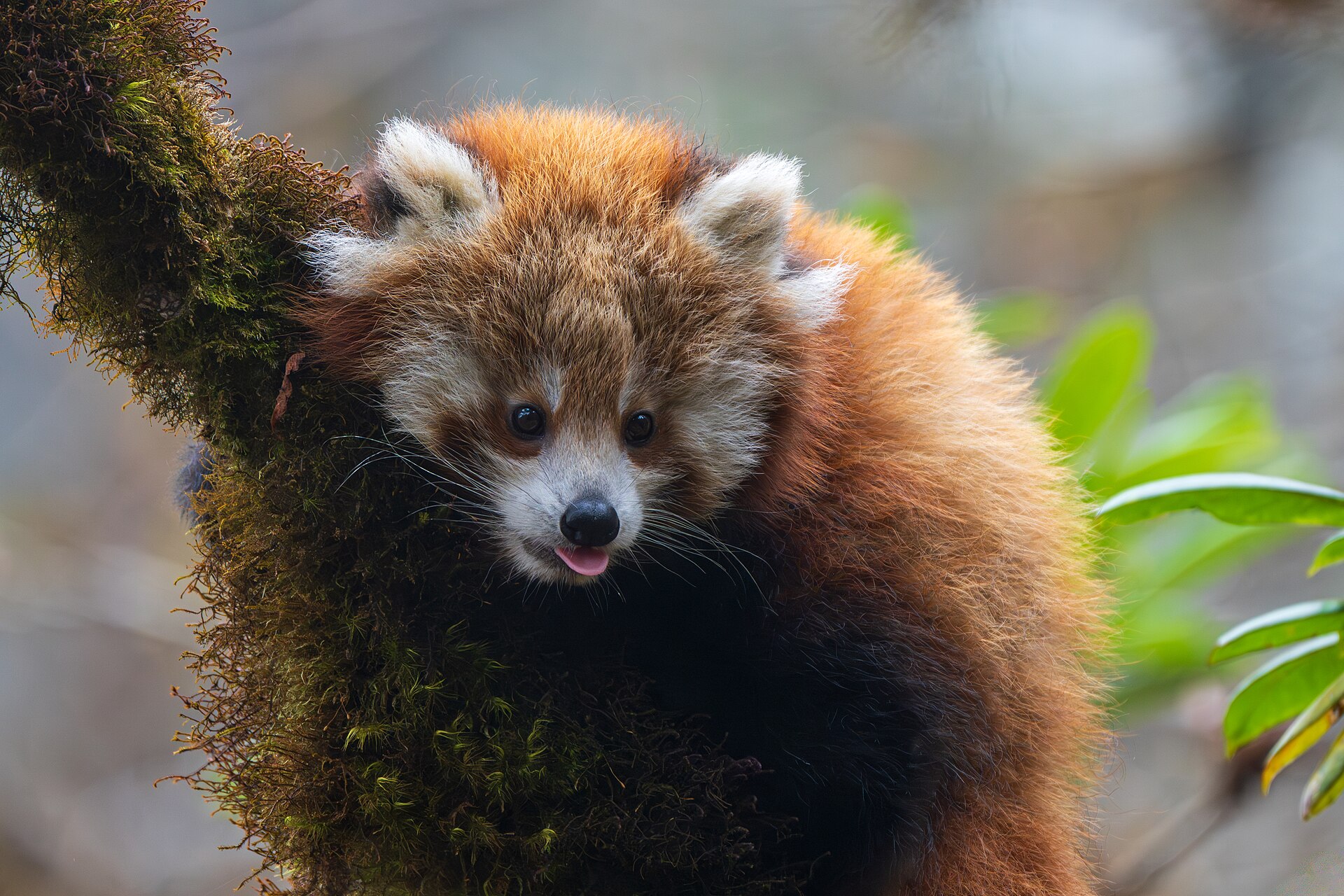
Photo: Sunuwargr, CC BY-SA 4.0, via commons.wikimedia.org.