Panda Diet: How a Bear Became a Bamboo Specialist
A giant panda eats up to 38 kg of bamboo a day with the gut of a carnivore. Here is how the diet shift happened, what the broken umami gene did, and why the microbiome never caught up.

Panda news, photography, conservation, species profiles, and where to see giant pandas and red pandas in the wild and in zoos.

A giant panda eats up to 38 kg of bamboo a day with the gut of a carnivore. Here is how the diet shift happened, what the broken umami gene did, and why the microbiome never caught up.

Tala and Sumi were found dead at Longleat in December 2022. Longleat blamed hypothermia combined with the weaning stage, and it explains why a cold-adapted species still loses cubs to a British freeze.

A sick diplomatic panda opened a rare channel between Taipei and Beijing in 2022. What the visiting Chinese vets did, what the autopsy found, and who is left at Taipei Zoo.

Rusty escaped the National Zoo for one morning in 2013 and became a national story. He died at the Pueblo Zoo in October 2022, aged ten, after years of quieter breeding work.

Fifty checked facts about giant pandas and red pandas, covering diet, the pseudo-thumb, panda diplomacy, the 2016 IUCN downlisting and the red panda’s separate family.

Five panda films worth a family movie night, from Kung Fu Panda to Born in China, with notes on what each one gets right and wrong about real pandas.

The panda mascot handed to Beijing 2022 medallists before their medals: who designed it, what the ice shell and red heart mean, why it sold out, and the day it spoke on live TV.

Habitat loss, fragmentation into 33 isolated pockets, bamboo die-offs and hunting took the wild giant panda down to about 1,114 animals by 1985. Here is how each pressure worked, and where the population stands now.
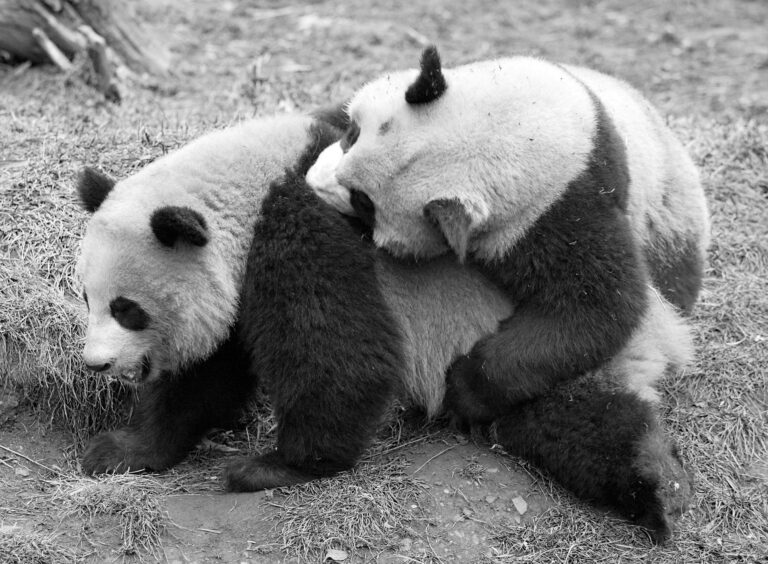
Giant pandas moved from Endangered to Vulnerable in 2016 and China followed in 2021. Here is what the listing means, what the census numbers actually say, and what still threatens the species.
From a pelt sent to Paris in 1869, through the trophy expeditions, to Su Lin at Brookfield Zoo and the WWF logo: how the giant panda became the animal the West cannot leave alone.

Around a million US dollars a year for a pair, a $600,000 fee for every cub born, a million-dollar life insurance policy, and an operating bill that dwarfs all of it. What renting a giant panda from China actually involves.

Ten reasons the red panda matters, from being the sole survivor of an entire mammal family to its role as a Himalayan flagship, with the conservation numbers corrected.
We send one careful panda roundup per month. Conservation news, species profiles, the occasional reader question we could not resist answering.
We never share your email. One-click unsubscribe.