

Why Red Pandas Matter: 10 Reasons to Care About Them
Last updated: November 16, 2026
7 min read
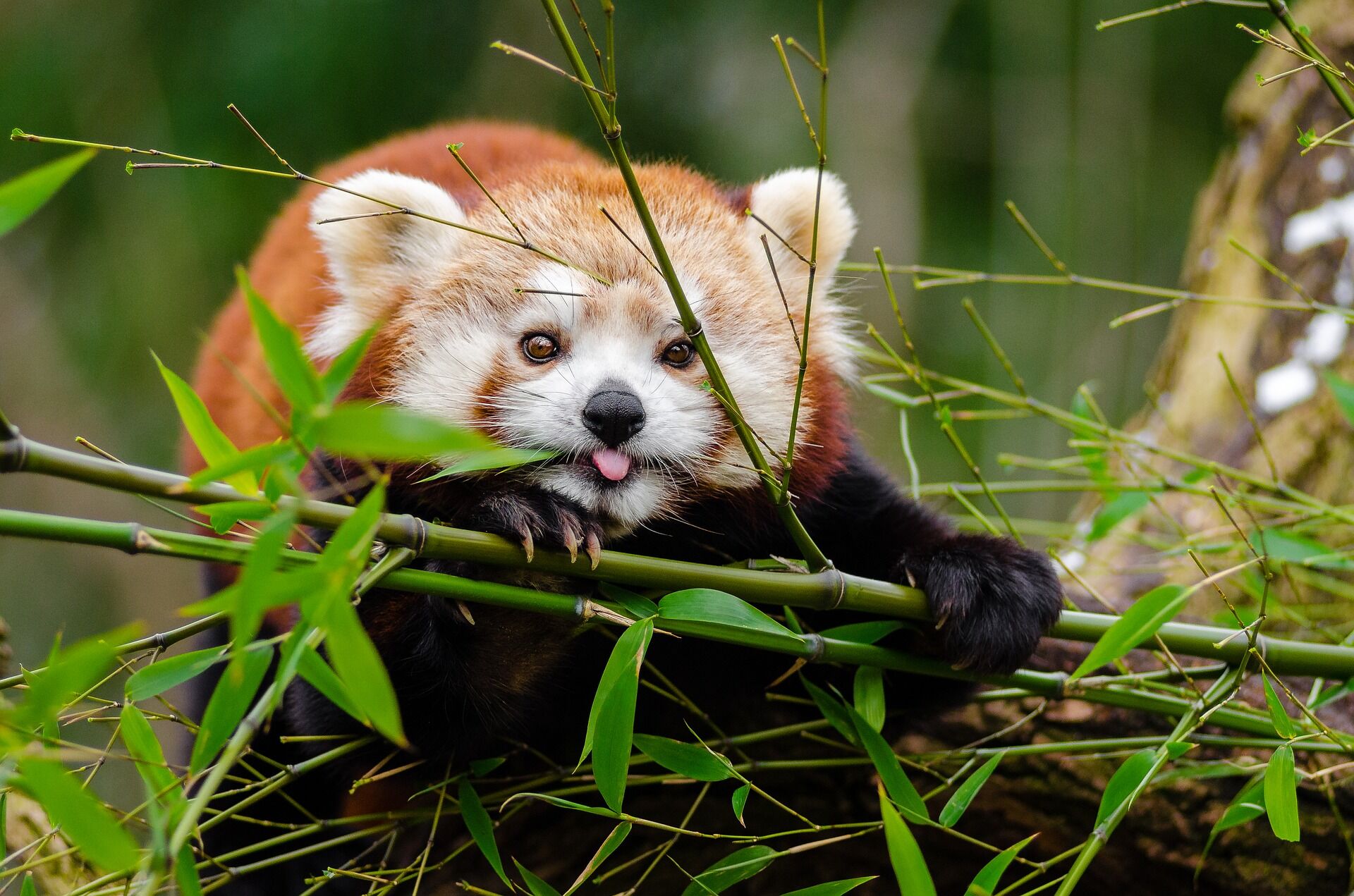
Red pandas matter because they are biologically irreplaceable. They are the sole living species in the family Ailuridae and one of several mammals specialised for a bamboo-rich diet. They are also an Endangered Himalayan flagship and a clear example of convergent evolution. Here are ten reasons to take them seriously.
Key facts at a glance
| Scientific name | Ailurus fulgens, with two recognised subspecies; proposed two-species split disputed |
|---|---|
| Family | Ailuridae (sole living member) |
| IUCN status | Endangered (2015 assessment) |
| Global population | Fewer than 10,000 mature individuals (the figure from before the 2015 IUCN assessment; no current census) |
| Projected decline | 50 percent over three generations (about 18 years) |
| Range | Nepal, India, Bhutan, Myanmar, China (Eastern Himalayas and southwest China) |
| Diet | About 95 percent bamboo, plus berries, acorns, lichen, eggs, small rodents |
| Pseudo-thumb | Evolved independently from the giant panda’s (radial sesamoid) |
| CITES status | Appendix I since 1995 (Appendix II before that) |
| Habitat shift | Habitat loss and fragmentation, poaching, snare bycatch, dog-borne disease |
The 10 reasons
1. They are an evolutionary one-of-a-kind
The red panda is the only living member of the family Ailuridae. Every other lineage in that family is extinct. By comparison, the giant panda has seven other living relatives in Ursidae; cats have around 40; dogs have over 30. The red panda is alone on its entire evolutionary branch. If the species goes extinct, the whole family goes with it. That makes red pandas one of the most biologically irreplaceable medium-sized mammals on Earth.
2. They are Endangered
The IUCN classifies the red panda as Endangered, with fewer than 10,000 mature individuals globally (the figure from before the 2015 IUCN assessment; there is no current census) and a projected 50 percent decline over the next three generations (about 18 years). That is a more serious classification than the giant panda’s Vulnerable status. Red pandas are, by IUCN status, the more at-risk of the two species.
3. They are a Himalayan ecosystem flagship
Red pandas occupy the same Eastern Himalayan temperate broadleaf forests as snow leopards, clouded leopards, takin, musk deer, and the bird species that make this region one of the most biodiverse temperate zones on the planet. Protecting red pandas typically protects all of them. That is the textbook definition of a flagship species: charismatic, photogenic, and a useful umbrella for less marketable wildlife.
4. They disperse forest seeds
Red pandas eat some fruit as part of a diet dominated by bamboo. Their effectiveness as seed dispersers has not been measured well enough to claim a defined forest role.
5. They share habitat with snow leopards and clouded leopards
Red panda habitat (2,200 to 4,800 m altitude, bamboo understory under broadleaf-conifer forest) overlaps directly with snow leopards in the upper part of the range and clouded leopards in the lower part. Both big cats are globally listed as Vulnerable. Conservation efforts targeting red pandas (anti-poaching patrols, habitat corridors, community education) almost automatically benefit both leopard species.
6. They indicate climate-driven forest shift
Red pandas are obligate bamboo eaters in temperate broadleaf forest. Both bamboo and the forest type shift upslope as temperatures rise. That makes red panda occupancy a useful marker for where the temperate broadleaf belt actually sits, and for whether it is moving. We have not found a published upslope rate we would stand behind, so we are not going to invent one, but the principle is sound and testable: track the pandas and you track the forest.
7. They demonstrate convergent evolution beautifully
Red pandas and giant pandas last shared a common ancestor about 40 million years ago. Yet both species independently evolved: a bamboo-specialised diet, a pseudo-thumb from the same wrist bone (the radial sesamoid), a slow metabolism, a long daily feeding window, and crushing molars built for bamboo. Two unrelated lineages, the same problem, the same set of solutions. Convergent evolution does not get cleaner than that. Our piece on why pandas eat bamboo covers the giant panda half of the story.
8. They anchor community conservation in Nepal and Bhutan
The Red Panda Network’s 2024 annual report recorded 94 Forest Guardians working across 64 community forests in Nepal. The programme combines monitoring, anti-poaching work and community conservation. Bhutan’s Jigme Dorji National Park (4,316 square kilometres) runs a similar community-led model. Bhutan’s first national red panda survey recorded 39 individuals inside the park, second only to Jigme Khesar Strict Nature Reserve, and put the country-wide total above 300. These are functioning, replicable conservation success stories.
9. They face severe illegal pet trade pressure
Red pandas are extremely cute, small, and tractable. That makes them targets for the illegal pet trade across India, Nepal, Myanmar, and into China. Seizures are recorded across the range and in transit countries, though enforcement data is patchy enough that the true scale is unknown. CITES Appendix I restricts international commercial trade in red pandas and their parts. Domestic rules and enforcement differ by country.
10. They are one of only two true bamboo specialists
Several mammals specialise in bamboo, including giant pandas, red pandas and greater bamboo lemurs. Each evolved that diet independently, making the red panda a useful example of convergent adaptation.
Threats driving the decline
Deforestation in the Eastern Himalayas
Forest loss for fuelwood, livestock pasture, hydropower access roads, and small-scale cardamom cultivation is the headline pressure across the entire range. The national picture is not straightforwardly bad, and it is worth being honest about that: Nepal’s forest cover roughly doubled between 1992 and 2016, from about 26 percent to 45 percent, on the back of its community forestry programme. What matters for red pandas is not the national total but what happens to particular forest tracts. Fragmentation, more than total loss, is what hurts them: they need contiguous canopy and a bamboo understory, both of which are lost first at the forest edge.
Poaching for fur and pet trade
Red panda fur is used for traditional ceremonial dress in parts of Bhutan and Yunnan. The pet trade pulls in animals across the entire range. Both are illegal but ongoing. Snare bycatch (snares set for musk deer or other species) catches red pandas accidentally and is hard to police.
Climate change and bamboo flowering
The same bamboo flowering cycle that periodically devastates giant panda habitat in Sichuan affects red pandas across their range. Flowering intervals vary widely between bamboo species, so different parts of the range get hit on different clocks. Combined with the upslope shift of the bamboo zone under climate warming, the long-term habitat trajectory is contraction and fragmentation.
Free-ranging dogs and disease
An underappreciated threat: village dogs roam into red panda habitat, kill the pandas directly, and transmit canine distemper. Distemper has killed captive red pandas, while free-roaming dogs remain a disease and predation risk near wild habitat. Vaccinating village dogs at the forest edge is now a frontline conservation intervention.
Conservation success stories
- Red Panda Network Forest Guardians (Nepal): Its 2024 annual report recorded 94 guardians across 64 community forests.
- Jigme Dorji National Park (Bhutan): 4,316 square kilometres, 39 red pandas recorded in Bhutan’s first national survey, and a community-led conservation model that includes vaccinating village dogs at the buffer-zone edge.
- Singalila and Neora Valley National Parks (West Bengal, India): Major Indian strongholds with active anti-poaching patrols and a captive breeding programme at the Padmaja Naidu Himalayan Zoological Park in Darjeeling.
- Sikkim community conservation: Several village-led forest committees patrol red panda habitat, with cardamom cultivation reorganised to keep canopy cover intact.
- Captive breeding studbook: Coordinated globally; the Padmaja Naidu zoo has produced multiple cubs released into Singalila with measured survival.
How to help
- Donate to the Red Panda Network or WWF. The Red Panda Network funds the Forest Guardian programme directly; WWF supports the broader Himalayan conservation portfolio.
- Avoid red panda merchandise of unclear origin. Real red panda fur or bone in any product is illegal under CITES Appendix I. Replicas are fine; verified-origin charity-shop items are fine; anything unverified is not.
- Share accurate information. “Red panda” is overwhelmingly used online as a cute meme rather than as a serious conservation concern. Sharing the IUCN status, the Ailuridae uniqueness, or the threats helps reframe the conversation.
- Travel responsibly in red panda range. Pick operators who work with local conservation NGOs (Red Panda Network in Nepal, Royal Society for Protection of Nature in Bhutan). Avoid disturbance during the November to March mating season.
For more on the species and the wider conservation picture, see our red panda species profile, the broader panda conservation overview, and our piece on what caused the giant panda’s decline in the first place (much of which applies to red pandas too).
Frequently asked questions
Why are red pandas important?
They are the sole living species in their family, Ailuridae, and a flagship for Himalayan temperate forest conservation.
What ecosystem role do red pandas play?
Red pandas eat fruit and form part of the food web. Research has not established a measured seed-dispersal service or a simple indicator relationship with forest condition.
Are red pandas threatened with extinction?
Yes. IUCN Endangered. Fewer than 10,000 mature individuals globally (the figure from before the 2015 IUCN assessment; there is no current census), with a projected 50 percent decline over the next three generations (about 18 years). They are more at-risk by IUCN status than giant pandas, which are Vulnerable.
What is killing red pandas?
Habitat loss from deforestation, poaching for fur, the illegal pet trade, climate-driven habitat shrinkage, snare bycatch, and disease transmission from free-ranging village dogs. The combined pressure is what drives the projected decline.
How are red pandas being protected?
National parks (Jigme Dorji in Bhutan, Singalila and Neora Valley in India, Langtang in Nepal), community-based programmes (Red Panda Network Forest Guardians), CITES Appendix I listing since 1995, captive breeding programmes coordinated through a global studbook, and dog-vaccination programmes at buffer-zone edges.
Are red pandas more endangered than giant pandas?
By IUCN status, yes. Red pandas are Endangered; giant pandas were downgraded to Vulnerable in 2016. Population estimates are also lower for red pandas (under 10,000 mature animals, the figure from before the 2015 IUCN assessment, with no current census) than for giant pandas (1,864 wild in China’s fourth national survey, 2011 to 2014, plus 830 in captivity on 3 November 2026).
Is it legal to own a red panda as a pet?
No. Red pandas are CITES Appendix I, which prohibits international commercial trade. Domestic ownership is illegal in every range country (Nepal, India, Bhutan, Myanmar, China) and almost everywhere else. Sanctuaries and accredited zoos are the only legal holders.
How can I help red pandas?
Donate to the Red Panda Network or WWF, share accurate information about the species’ status and threats, avoid red panda souvenirs of unclear origin, and travel responsibly when visiting red panda range countries (pick operators who work with local conservation NGOs).
Sources and further reading
- IUCN Red List: Ailurus fulgens (red panda)
- Red Panda Network
- WWF: red panda species profile
- Smithsonian National Zoo: red panda
- Science Advances: red panda evolutionary divergence
Related reading: red panda species profile, giant panda species profile, and 21 cool facts about pandas.
This article is part of our panda conservation guide, which links all our reporting on threats, breeding and release.
Updated 16 November 2026: updated the captive giant panda count to 830, as China reported on 3 November 2026, with a link to the report.





Worked on a red panda monitoring project in eastern Nepal in 2022. The illegal pet trade is the part most people do not see. Trafficking is heavier than the IUCN estimates and the rescue centres in Kathmandu are full.
Sole living member of Ailuridae is the line that sells the conservation argument best honestly. If they go, an entire family of mammals goes with them.
The pseudo-thumb evolving independently in red pandas and giant pandas is one of those facts that makes my brain hurt every time I think about it. Convergent evolution genuinely produces miracles.
The 10m per decade upslope habitat shift is climate change in a nutshell. They are literally running out of mountain in some ranges.