The Panda Gut Microbiome: How a Carnivore Digests Bamboo
Last updated: November 5, 2026
5 min read
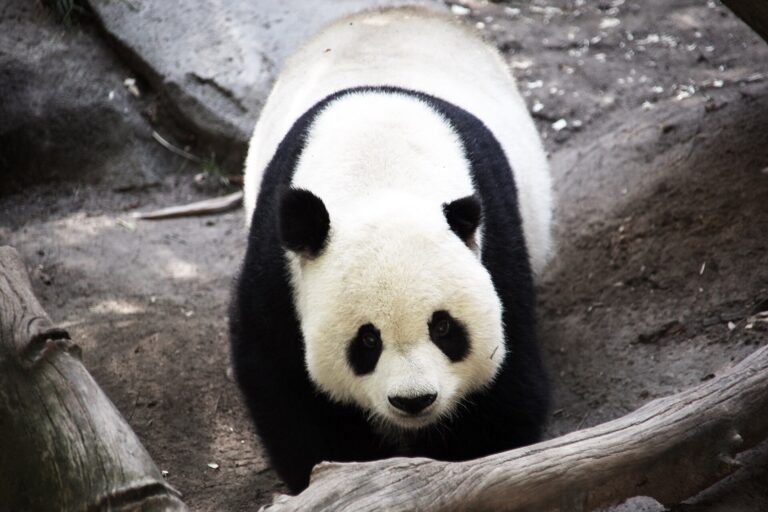
A giant panda has the digestive tract of a meat-eater and a diet that is almost entirely bamboo. It compensates through high intake, rapid passage and selective feeding on the easiest parts of bamboo. When Dierenfeld and colleagues measured it directly, bamboo dry matter digestibility averaged under 20 percent, and the cellulose itself came out at about 8 percent.
Key facts
- Gut length: about four times body length, the ratio you see in carnivores. True herbivores run roughly 10 to 20 times.
- Anatomy: simple single-chambered stomach, degenerate caecum, very short colon. No rumen and no large fermentation chamber.
- Bamboo dry matter digested: under 20 percent on average.
- Cellulose digested: about 8 percent. Hemicellulose about 27 percent.
- Gut transit: markers cleared completely in under 12 hours.
- Cellulose-linked bacteria: 13 operational taxonomic units related to Clostridium groups I and XIVa, seven of them found nowhere but pandas.
- Daily intake: about 12 to 38 kg of bamboo for an adult.
A carnivore’s gut, eating plants
Open a panda up and the plumbing looks like a dog’s, or a raccoon’s. Simple stomach, degenerate caecum, very short colon, no rumen, no hindgut fermentation vat. The whole tract runs to roughly four times body length, where an animal built to live on plants would carry ten to twenty times. Food also moves through fast: in the 1982 Journal of Nutrition study, markers fed to pandas cleared the gut in under 12 hours. There is simply not much time for anything slow to happen.
What fills the gap is bacterial. Zhu and colleagues sequenced 5,522 prokaryotic ribosomal RNA gene sequences from the faeces of wild and captive pandas and reported the result in PNAS in 2011. They found 13 operational taxonomic units related to Clostridium groups I and XIVa, which include cellulose-digesting taxa. Later work found no significant microbial digestion of cellulose, so the practical contribution remains uncertain.
It is worth being precise about which bacteria do what, because the two are often conflated. The genera that dominate the panda gut by sheer abundance are Escherichia/Shigella and Streptococcus, as Xue and colleagues showed in mBio in 2015. Neither is a fibre specialist. Those are the bacteria you would expect in a bear that eats meat. The proposed cellulose-linked Clostridium groups sit well behind them in the count, and their practical role remains uncertain.
Why bamboo digestion is so inefficient
Two things hold the numbers down. The first is speed: cellulose breakdown is slow fermentation, and a 12-hour transit through a short tube does not give it long enough. The second is that the cellulolytic community is tiny. Zhu’s metagenome put cellulases at 2 percent of the carbohydrate-active genes against 36 percent for enzymes that handle simpler oligosaccharides. A 2022 survey in Frontiers in Microbiology went further, finding that the individual species capable of attacking cellulose sat below 0.01 percent relative abundance, and calling the whole arrangement a primary and amateur cellulolytic microbiota.
So the panda pays in volume. An adult works through roughly 12 to 38 kg of bamboo a day. The amount and plant parts selected vary by animal and season. This high intake compensates for low digestive efficiency.
Seasonal shifts, and what they are actually for
Panda gut microbiomes swing hard with the seasons. Xue and colleagues found that the variation within a single animal across the year was larger than the variation between different animals, which is unusual and says the diet is driving it.
Huang and colleagues then worked out what the swing does. Sampling eight wild pandas in the Qinling mountains across both seasons, they found the butyrate-producing bacterium Clostridium butyricum far more abundant during shoot season, tracking a rise in the animals’ body mass. When they transplanted shoot-season faeces into germ-free mice, those mice grew faster and stored more fat than mice given leaf-season faeces on identical food. The mechanism they traced runs through butyrate, which extends expression of the liver circadian gene Per2 and raises phospholipid synthesis. The paper ran in Cell Reports in 2022.
That reframes the seasonal shift. The shift is how a panda banks fat during the few weeks when protein-rich shoots are available, against the leaf and culm months when they are not.
What this means for evolution
The panda never evolved a herbivore’s gut. It kept the carnivore-like digestive tract it inherited and compensates through selective feeding, rapid passage and high intake. Compare that to the pseudo-thumb or the enlarged molars, which are genuine skeletal adaptations to the diet: the digestive side of the specialisation stalled. Our piece on ancient pandas eating meat as well as bamboo covers how the lineage got here.
Related reading on welovepandas
- How pandas became bamboo dependent
- Ancient pandas ate meat
- Species Profile: The Giant Panda
- 7 differences between pandas and other bears
- 21 cool panda facts
Sources and further reading
- Zhu, L., Wu, Q., Dai, J., Zhang, S. and Wei, F. (2011). Evidence of cellulose metabolism by the giant panda gut microbiome. PNAS 108(43): 17714 to 17719. DOI 10.1073/pnas.1017956108.
- Dierenfeld, E.S., Hintz, H.F., Robertson, J.B., Van Soest, P.J. and Oftedal, O.T. (1982). Utilization of bamboo by the giant panda. Journal of Nutrition 112: 636 to 641.
- Xue, Z. et al. (2015). The bamboo-eating giant panda harbors a carnivore-like gut microbiota, with excessive seasonal variations. mBio. DOI 10.1128/mBio.00022-15.
- Huang, G. et al. (2022). Seasonal shift of the gut microbiome synchronizes host peripheral circadian rhythm for physiological adaptation to a low-fat diet in the giant panda. Cell Reports.
- IUCN Red List: Giant Panda
- WWF: Giant Panda
This article is part of our Giant Panda guide hub.
Read next
- Panda Facts: 50+ Surprising Things About Giant Pandas and Red Pandas (2026)
- Panda Bite Force: Why Bamboo Eaters Have Such Strong Jaws
- Panda Diet: How a Bear Became a Bamboo Specialist
Frequently asked questions
Do pandas have a special stomach?
No. The stomach is simple and single-chambered, the caecum is degenerate and the colon is very short, which is the standard carnivore layout. Bamboo digestion happens through gut bacteria, not through specialised anatomy.
Which bacteria let pandas digest bamboo?
One 2011 study identified Clostridium groups I and XIVa as possible cellulose-digesting taxa. Later work found no significant microbial digestion of cellulose, so their practical contribution remains uncertain.
How much of the bamboo do pandas actually digest?
Under 20 percent of the dry matter on average. Broken down by component, the 1982 feeding trials put apparent digestibility at about 8 percent for cellulose and about 27 percent for hemicellulose.
Why do pandas eat so much?
Because bamboo yields little energy. Adults eat roughly 12 to 38 kg a day, with the amount and parts selected varying by animal and season.
Do pandas lose weight when the bamboo season changes?
The better-documented pattern is the opposite. Wild pandas gain body mass during shoot season, and the 2022 Cell Reports work links that gain to a bloom of Clostridium butyricum and the butyrate it produces.
Could pandas eat meat?
The gut could handle it, since it is a carnivore’s gut, and wild pandas do take carrion or small animals occasionally. Bamboo still accounts for almost the entire diet.
Updated 14 September 2026: corrected factual details after a full review against primary sources.