Why Pandas Do Handstands: Scent Marking Explained
Last updated: November 5, 2026
3 min read
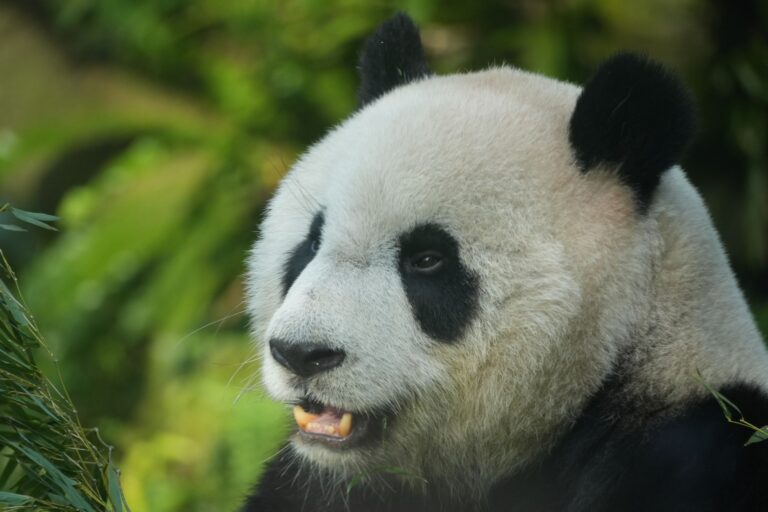
Pandas are famous for doing handstands against trees. They are scent-marking as high as they can reach, using a gland under the tail. The higher the mark, the bigger the panda, and other pandas use the height to gauge whether to approach or avoid.
Key facts
| Scent gland location | Anogenital region, under the tail |
|---|---|
| Mark height | Up to 1.5 m via handstand |
| Function | Identity, sex, breeding readiness, body size |
| Used by | Both males and females, all year |
| Peak marking season | March to April (mating) |
| Other panda communication | Vocal calls, urine, claw marks |
The panda handstand: what is happening
A wild giant panda will walk up to a smooth tree trunk, sniff the bark, turn around, balance on its forelimbs, and rub a waxy secretion from its anogenital gland onto the bark as high as it can reach. The handstand is functional. It lets a smaller panda put its mark above a competitor’s, which suggests greater body size.
Camera-trap and field studies in Wolong and Foping have caught the move many times, sometimes followed by a leg-cocked urine spray and a few claw scrapes for visual reinforcement (see Nie, Swaisgood and colleagues on wild scent-marking strategies in Animal Behaviour). Worth pausing on: it is one of the few large-carnivore signal systems where body size is encoded geometrically rather than chemically.
What the scent actually communicates
Hagey and MacDonald (2003, Journal of Chemical Ecology 29: 1479 to 1488) ran mass spectrometry across panda scent glands, urine, vaginal secretions and rub-tree marks and picked out 951 chemical components. From the relative proportions of a subset of those, they could classify sex correctly 94 percent of the time and individual identity 81 percent of the time for males and 91 percent for females. Male marks carry significantly more short-chain fatty acids than female marks. Body size, in contrast, is inferred from the height of the mark itself, not from the chemistry.
Other pandas approach a mark, sniff it for up to a minute, and respond in different ways. A female near oestrus will often add her own mark beside the male’s, then bleat. A male encountering a larger rival’s high mark may turn away without leaving anything. The mark tree becomes a kind of bulletin board, updated by every passing animal.
Why this matters for low-density populations
Wild giant pandas live at very low densities, with wide individual home ranges and long gaps between neighbours. Direct encounters are rare. Most communication has to happen across days or weeks, via marks left in advance.
Scent marks and calls help pandas locate and assess mates during the breeding season, which generally runs from March to May. This is one reason habitat fragmentation hurts pandas more than it would hurt a higher-density species: the chemical conversation needs a connected landscape to work.
Red panda scent marking is different
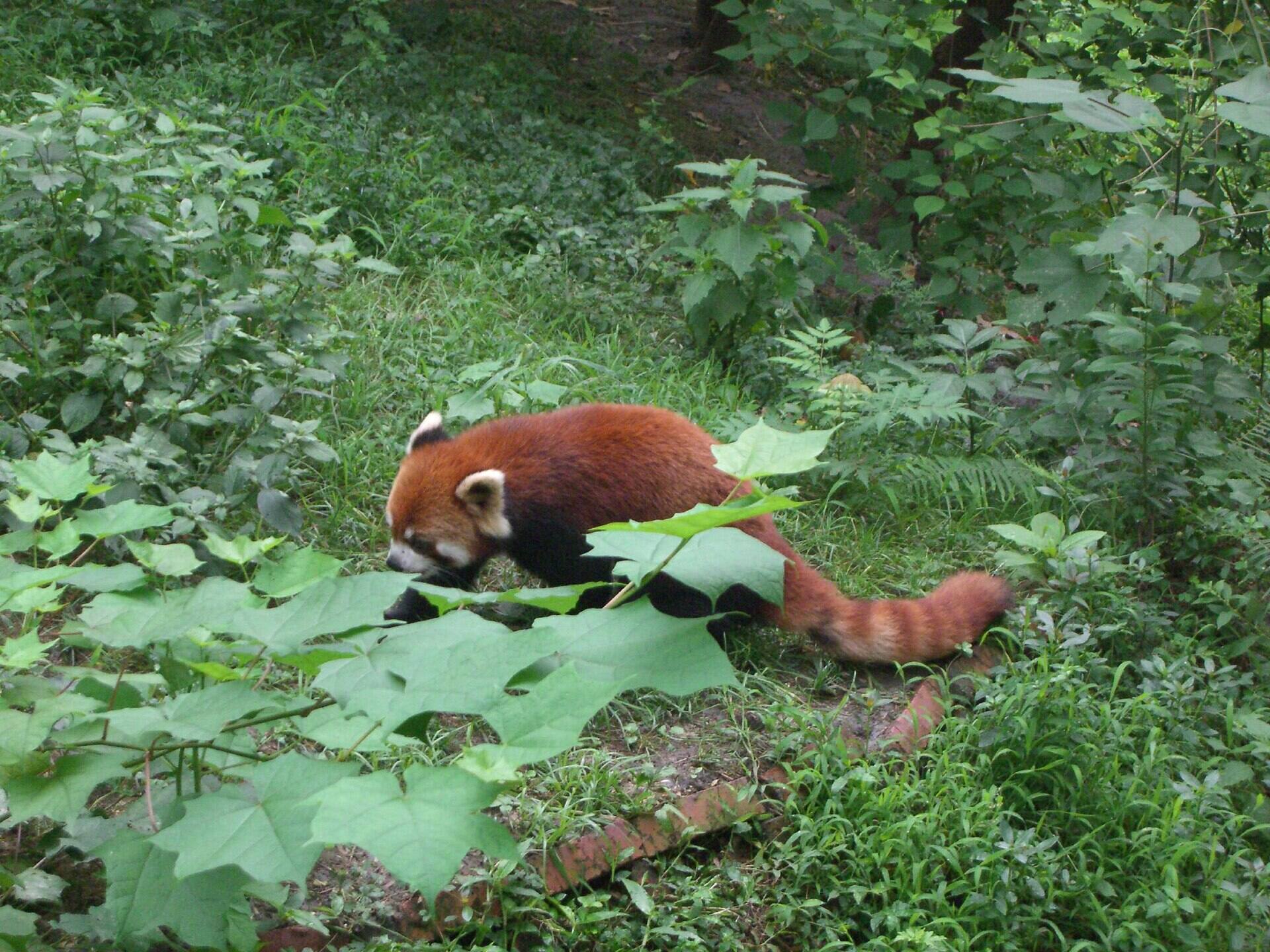
Red pandas mark too, but rarely with handstands. They have anal glands plus glands on the soles of their feet, and they leave scent on horizontal branches by walking and squatting. They also urinate small amounts to mark, and males will rub scent on objects with their chins.
Both species use scent more than sound for long-distance communication, and both species rely on a constant background of marks to map who is who in the local forest.
Related reading on welovepandas
- Species Profile: The Giant Panda
- giant panda reproduction
- the giant panda life cycle
- 21 cool panda facts
- 7 reasons red pandas matter
- 7 differences between pandas and other bears
Sources and further reading
- Hagey, L. and MacDonald, E. (2003). Chemical cues identify gender and individuality in giant pandas (Ailuropoda melanoleuca). Journal of Chemical Ecology 29(6): 1479 to 1488.
- Nie, Y., Swaisgood, R. et al. Giant panda scent-marking strategies in the wild. Animal Behaviour.
- Smithsonian National Zoo: Giant Panda
This article is part of our Giant Panda guide hub.
Frequently asked questions
Why do pandas do handstands?
To leave scent marks as high as possible on tree trunks. The higher the mark, the bigger the panda is perceived to be.
What gland produces the scent?
An anogenital gland under the tail produces a waxy secretion that pandas rub onto vertical surfaces.
How long does a panda scent mark last?
In cool, dry conditions it can last several weeks. In wet weather it degrades within a few days.
Do female pandas handstand too?
Yes. Females scent-mark all year, with extra activity around oestrus in March and April.
Do red pandas do handstands?
Rarely. Red pandas mark mostly with glands on their feet, by walking and squatting on horizontal branches.
This article is part of our panda facts guide, which links every article on panda biology, behaviour and culture.
Updated 14 September 2026: corrected factual details after a full review against primary sources.