Panda vs Koala: Two Famous Vegetarian Mammals Compared
Last updated: November 5, 2026
3 min read
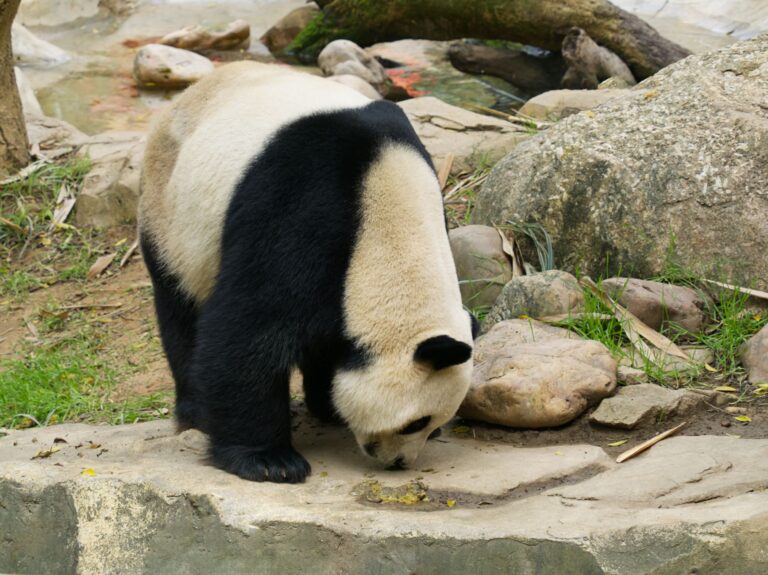
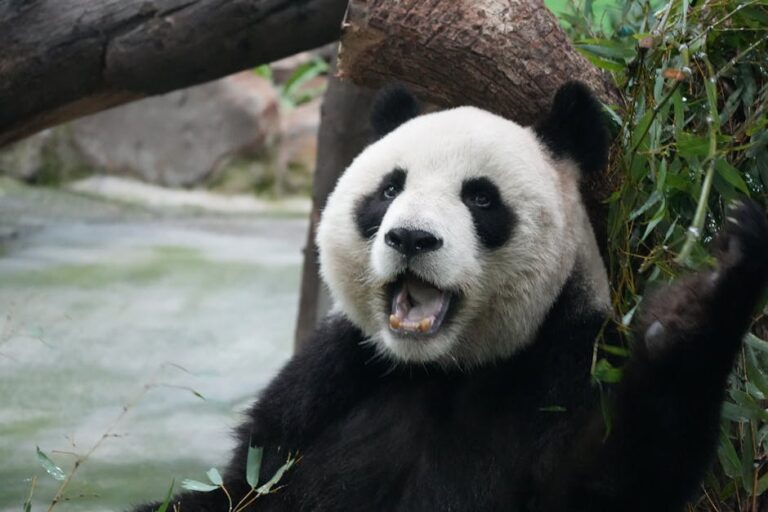
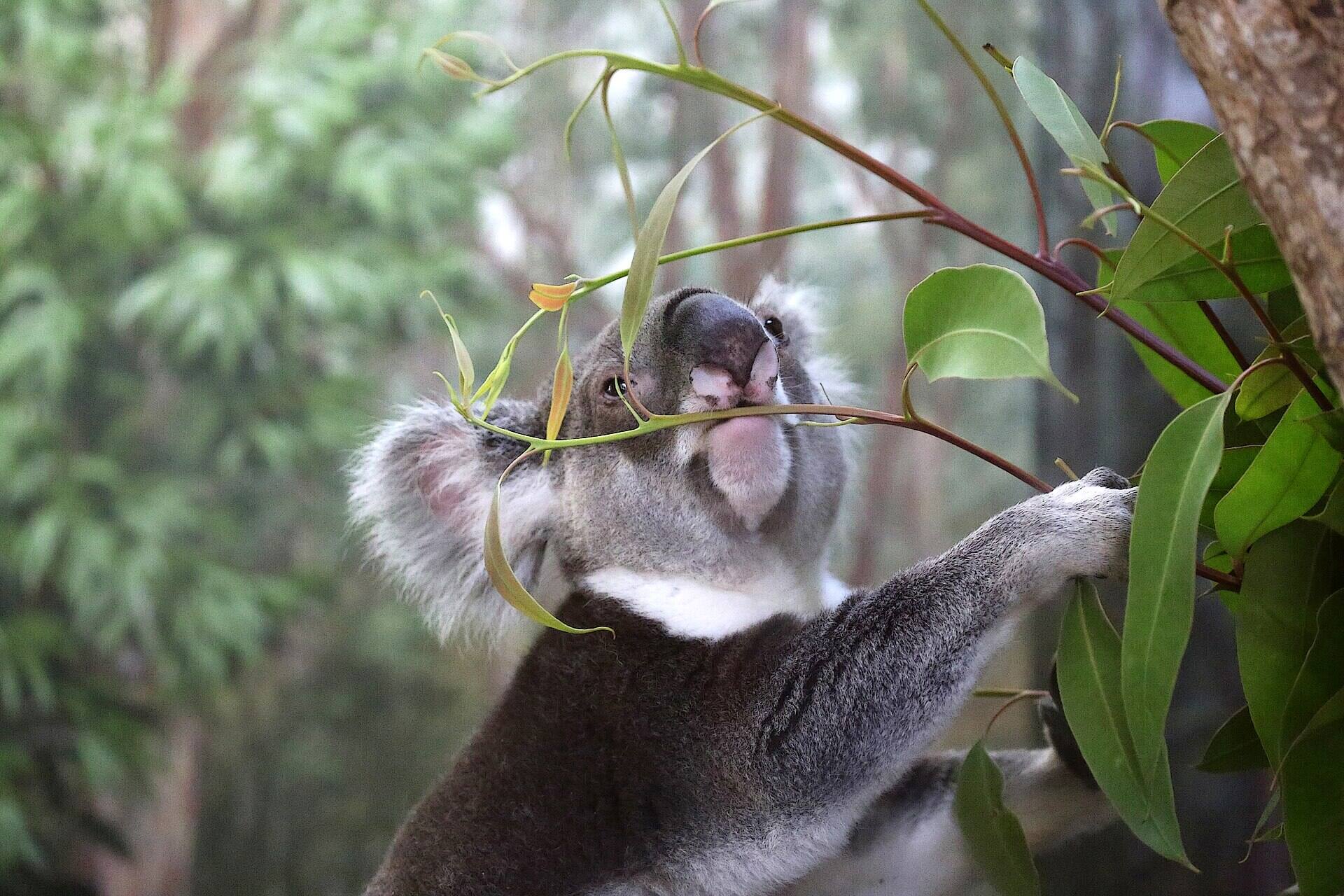
Giant pandas and koalas are often grouped together in casual conversation because both are charismatic, both eat one plant, and both look soft. Beyond that they are completely different. One is a bear in China that eats bamboo. The other is a marsupial in Australia that eats eucalyptus. The contrast is a good way to understand specialism.
Key facts
- Panda taxonomy: bear (Ursidae)
- Koala taxonomy: marsupial (Phascolarctidae)
- Panda diet: bamboo (mostly)
- Koala diet: eucalyptus leaves (mostly)
- Panda range: mountain forests of Sichuan, Shaanxi and Gansu in central China
- Koala range: eastern Australia
Different evolutionary trees
Pandas are bears, in the family Ursidae, but they sit on the most distant branch of the bear family tree. Their lineage split from the other bears around 19 million years ago, which is why a panda looks bear-shaped and behaves almost nothing like a brown bear. Pandas are placental mammals with a standard mammalian gestation, even if implantation is delayed.
Koalas are marsupials, in the family Phascolarctidae, with no close living relatives. Wombats are the next nearest group. Koalas carry tiny jelly-bean newborns in a pouch for around six months. Marsupials and placental mammals parted company at least 160 million years ago, going by both the fossil record and molecular clocks, so panda and koala are about as distantly related as two furry mammals can be.
Single-food specialists, similar problem
Both species depend on a single plant family. Pandas eat bamboo. Koalas eat eucalyptus. Both plants are nutritionally poor, hard to digest, and require special adaptations. Captive bamboo-only trials measured panda energy digestibility from 9.2 to 34.0 percent. Koalas use specialised gut microbes to ferment eucalyptus leaves.
Both species pay for the specialism with slow metabolism, long rest periods, and vulnerability to habitat loss. Both also have specialised digits: the panda pseudo-thumb for gripping bamboo, and the koala’s pair of opposable digits on each forepaw for gripping eucalyptus branches.
Behaviour and life history
Pandas sleep around 10 hours a day, mostly on the ground, in short naps. Koalas sleep 18 to 22 hours a day, mostly in trees, in long stretches. The difference is partly metabolic: eucalyptus is more toxic than bamboo, so koalas conserve energy more aggressively.
Both species reproduce slowly. Pandas have one fertile window per year. Koalas have a longer breeding season but only one joey per year. Both have low cub or joey survival in the wild and benefit from intensive conservation.
Conservation status
The IUCN moved the giant panda from Endangered to Vulnerable in 2016, and wild numbers are stable or slowly improving thanks to the Chinese reserve system. The koala is still listed as Vulnerable by the IUCN globally, but Australia’s own national list moved koalas in Queensland, New South Wales and the ACT from Vulnerable to Endangered in February 2022, after the 2019 to 2020 bushfires and continuing habitat loss.
The two species illustrate opposite trajectories: a panda recovery driven by heavy central government intervention, and a koala decline despite decades of public awareness. The reasons are political as much as ecological. Pandas live inside a single centrally managed reserve system. Koalas live largely on private land across several Australian states with limited coordinated protection.
Related reading on welovepandas
- 7 differences between pandas and other bears
- how pandas became bamboo dependent
- Species Profile: The Giant Panda
- ancient pandas ate meat
- 21 cool panda facts
Sources and further reading
- IUCN Red List: Giant Panda (Ailuropoda melanoleuca)
- IUCN Red List: Koala (Phascolarctos cinereus)
- Australian Department of Climate Change, Energy, the Environment and Water: koala listing decision, February 2022
This article is part of our Giant Panda guide hub.
Read next
- Panda Facts: 50+ Surprising Things About Giant Pandas and Red Pandas (2026)
- Giant Panda vs Sloth Bear: How Two Asian Bears Compare
- Madrid's Pandas: Europe's Longest Panda History
Frequently asked questions
Are pandas and koalas related?
Not closely at all. Pandas are placental bears. Koalas are marsupials. The two lineages parted at least 160 million years ago.
Do they both eat one plant?
Effectively yes. Bamboo makes up roughly 99 percent of a wild panda’s diet. Eucalyptus makes up almost all of a koala’s.
Which sleeps more?
Koalas, by a lot. Koalas sleep 18 to 22 hours a day. Pandas sleep around 10 hours a day.
Which is more endangered?
The IUCN lists both as Vulnerable. Australia lists koalas in Queensland, New South Wales and the ACT as Endangered nationally, a decision taken in 2022. On trajectory the koala is currently the worse case.
Do koalas have a panda-style thumb?
Sort of. Koalas have two opposable digits on each forepaw for gripping branches. Pandas have five ordinary digits plus a pseudo-thumb, which is an enlarged wrist bone rather than a true finger.
This article is part of our giant panda guide, which links every species, evolution and zoo article on the site.
Updated 14 September 2026: corrected panda digestibility figures after review against primary sources.