

Giant Panda Sanctuaries: 7 Best Reserves in Sichuan and Shaanxi
Last updated: November 16, 2026
8 min read
Almost every wild giant panda left on the planet lives in central China, and almost every place you can realistically see one is in Sichuan or just over the border in Shaanxi. This guide walks through the seven sanctuaries that matter: three captive breeding bases open to visitors, two semi-wild reserves where pandas live in fenced forest, and two wild reserves where the bears roam free and tourists almost never see them. It also covers the UNESCO World Heritage listing that ties many of these places together.
Key facts at a glance
| Countries covered here | China (Sichuan and Shaanxi) |
|---|---|
| Best base for first-time visitors | Chengdu Research Base of Giant Panda Breeding |
| China’s first panda reserves | Wolong, Wanglang, Baihe and Labahe, all established 1963 |
| UNESCO World Heritage inscription | Sichuan Giant Panda Sanctuaries, 2006 |
| UNESCO site area | 924,500 hectares |
| Reserves in the UNESCO site | 7 nature reserves plus 9 scenic parks |
| Bases that allow visitors | Chengdu, Dujiangyan, Bifengxia, Wolong (Shenshuping) |
| Best months to visit | April to May, September to October |
| Chance of seeing a wild panda | Very low, even inside the reserves |
| Direct contact with pandas | Suspended at the Chengdu-area bases since October 2018 |
Captive breeding sanctuaries (built for visitors)
These three bases are designed around public access and dependable panda viewing. If you only have a few days in China, you will spend them here.
Chengdu Research Base of Giant Panda Breeding
The Chengdu Research Base sits on the northern edge of Chengdu city and is the most visited panda facility on Earth. It was founded in 1987 with six giant pandas rescued from the wild, and its own website listed more than 270 giant pandas when we checked on 16 November 2026, up from 237 at the end of 2022. Alongside the giant pandas there is a sizeable red panda group, an interpretation centre and a working veterinary hospital.
If you want the biology behind the animal these sanctuaries protect, read our complete giant panda species guide.
For visitors, the practical advantage is reliability. The enclosures are arranged so you can see a dozen different pandas in a single morning, and there is a nursery viewing window where infant cubs are visible during the late summer and autumn cub season. The base is reachable from central Chengdu by metro and bus, which makes it the easiest panda sighting on the planet. Buy tickets ahead in peak season because the morning slots sell out.
Dujiangyan Base and Panda Valley
The CCRCGP Dujiangyan Base opened in 2013 as a Hong Kong-funded rescue, veterinary and geriatric centre. Panda Valley is a separate Dujiangyan facility run by the Chengdu Research Base. It is about 40 minutes from Chengdu by high-speed rail, and it is the easiest base to combine with a visit to the Dujiangyan irrigation system and Mount Qingcheng.
The CCRCGP Dujiangyan Base closed for major works in April 2026. Check the responsible organisation’s official site for its current visitor and volunteer status.
Bifengxia Panda Base (Ya’an)
Bifengxia, in the wooded hills outside Ya’an city, was completed in 2003 and became the main home for Wolong’s captive pandas after the 2008 Sichuan earthquake wrecked the original Wolong facility. It covers close to 400 hectares of terraced enclosures and typically holds somewhere between 60 and 80 animals, though the number moves as pandas rotate between Chinese bases. The grounds feel more naturalistic than Chengdu, with bamboo forest and rolling hills, and the visitor flow is lighter.
Bifengxia takes roughly three hours from Chengdu by car or bus. The trip pairs well with Mount Mengding tea farms. Like Dujiangyan, the base runs a volunteer scheme; book through the base’s own official channels rather than a third-party reseller.
Hybrid sanctuaries (semi-wild, partial visitor access)
Wolong National Nature Reserve (Shenshuping centre)
Wolong is where modern panda conservation effectively started. It was one of the four reserves China set aside for pandas in 1963, at first covering only about 200 square kilometres, and it was expanded to roughly 200,000 hectares in 1975 across the eastern Qionglai Mountains. Today it sits inside both the Sichuan Giant Panda Sanctuaries World Heritage site and Giant Panda National Park. Most of the reserve is restricted research land, but the rebuilt Shenshuping breeding centre is open to visitors with prior booking.
Wolong is also where the reintroduction work happens, at the Hetaoping centre and the Tiantaishan wild-training area rather than at Shenshuping itself. Pregnant females give birth in large semi-wild enclosures, and the cubs stay with their mothers learning to forage, find water and avoid black bears and wild boar. Since the programme began in 2003 the CCRCGP has released 11 pandas, of which nine have survived. The viewing experience here is less about photo ops and more about understanding how a captive-born panda is trained back into being wild.
Foping National Nature Reserve (Qinling mountains, Shaanxi)
Foping was established in 1978 and covers 292.4 square kilometres of the Qinling Mountains in southern Shaanxi. This is the stronghold of the Qinling subspecies (Ailuropoda melanoleuca qinlingensis), a genetically distinct group with smaller skulls and, in a handful of individuals, a brown-and-cream coat instead of black-and-white. The 2015 fourth national survey counted 345 wild pandas in Shaanxi, all of them Qinling animals. Foping is harder to reach than the Sichuan bases and gets far fewer visitors, which is part of its appeal.
Permits are required for the core reserve. Wild sightings do happen, most often in winter when pandas drop to lower elevations to feed, but plan for a hike-and-see-no-panda outcome by default.
Wild reserves (visit the boundary, do not expect a sighting)
Wanglang National Nature Reserve (Sichuan)
Wanglang is one of the four original 1963 panda reserves and one of the least developed for tourism. It covers 32,297 hectares in Pingwu County, northern Sichuan, on the Minshan slopes, and it has been the site of decades of camera-trap work and faecal DNA monitoring. The reserve runs occasional research-led ecotours, but captive panda viewing is not part of the model. Come here for the science, the deep forest and the chance to walk transects, not for guaranteed photos.
Tangjiahe National Nature Reserve (Sichuan)
Tangjiahe sits in the same Minshan range as Wanglang but further east, in Qingchuan County, and covers about 40,000 hectares. The fourth national survey counted 39 wild giant pandas here. It is better known for its other residents: roughly 800 golden snub-nosed monkeys and around 1,300 takin, plus Asiatic black bears. The reserve has a small visitor centre and a few accessible loops. Treat it as a high-quality nature walk with the outside chance of fresh panda scat on a trail rather than a panda-viewing destination.
The UNESCO World Heritage element
In 2006, UNESCO inscribed the Sichuan Giant Panda Sanctuaries as a single World Heritage site of 924,500 hectares. The umbrella covers seven nature reserves and nine scenic parks across the Qionglai and Jiajin mountains. Wolong, Mount Siguniang, Heishuihe, Caopo and several others sit inside this footprint, and together they hold more than 30 percent of the world’s wild giant pandas.
The listing constrains development inside the protected boundary and ties Chinese conservation reporting to periodic international review. The official record is at whc.unesco.org/en/list/1213.
How to plan a panda sanctuary visit
Best season
April to May and September to October give you mild weather and active pandas. Midsummer in Sichuan is hot and humid, and the bears spend most of the day inside air-conditioned dens. Late winter (January to February) is interesting because the pandas are visibly more active in the cool air, but travel is harder and some mountain reserves are cut off by snow.
Getting in
Fly into Chengdu Shuangliu (CTU) or Chengdu Tianfu (TFU). Chengdu Research Base is reachable by city metro and bus. Dujiangyan is about 40 minutes on the high-speed rail. Bifengxia is around three hours by car. Wolong is a long winding mountain drive; hire a driver rather than self-driving. Foping means flying into Hanzhong (HZG) in Shaanxi and continuing by road. For a deeper dive into the wider park system, see our walkthrough of the Giant Panda National Park.
Ethical visiting
Paid panda holding and photo sessions were suspended at the Chengdu-area bases in October 2018 on welfare and disease-control grounds, and the interaction activities at Bifengxia had already stopped in 2015. If a tour seller is still advertising direct-contact panda photos, that is a strong signal to book elsewhere. The official volunteer pathways at Dujiangyan, Bifengxia and Wolong involve cleaning, food prep and observation work, with no touching or holding.
For more background on how the species got into the position of needing this many reserves, the long-form story is in our piece on how the giant panda became endangered. The flip side, current conservation work, is covered in giant panda conservation efforts, and the habitat-loss backstory in giant panda habitat.
Read next
- Panda Facts: 50+ Surprising Things About Giant Pandas and Red Pandas (2026)
- Giant Panda vs Spectacled Bear: South America's Only Bear vs China's Star
- Giant Panda vs Sloth Bear: How Two Asian Bears Compare
Frequently asked questions
Where can I see giant pandas in China?
The most reliable options are Chengdu Research Base inside Chengdu city, Dujiangyan Panda Base about 40 minutes away by train, and Bifengxia in Ya’an. Wolong’s Shenshuping centre and Foping in Shaanxi require more travel but sit in far larger landscapes. For a first trip, Chengdu plus a day at Dujiangyan covers the essentials.
Is Chengdu Research Base ethical to visit?
Yes, with caveats. The base is a serious research and breeding facility and the standard visitor tour is welfare-friendly. Direct contact has been suspended since October 2018, so decline any add-on that promises handling or photos with a restrained animal. Standard viewing from the public walkways is fine.
Can you see wild pandas in Sichuan?
Theoretically yes in Wolong, Wanglang and Tangjiahe, but sightings are rare even for researchers who work in those forests daily. Plan for hiking and accept that you may only see signs: fresh scat, chewed bamboo, fur on tree bark. Treat any direct sighting as a windfall.
What is the best time of year to visit a panda sanctuary?
April to May and September to October. The weather is mild and the pandas are active in the cooler parts of the day. Avoid hot, humid midsummer, when the bears stay inside air-conditioned dens for much of the daylight hours. Late winter can be excellent at lower-altitude bases but harder to reach at the higher reserves.
How many pandas are at Chengdu Research Base?
The base’s own website listed more than 270 giant pandas when we checked on 16 November 2026. The exact count drifts with births, deaths and rotations to other Chinese facilities and partner zoos abroad.
What is the difference between Wolong and Bifengxia?
Wolong is one of the original 1963 reserves and is run as a semi-wild research and reintroduction landscape; visitors can access the Shenshuping centre but not the wider protected forest. Bifengxia is the base near Ya’an that took in most of Wolong’s captive animals after the 2008 earthquake, and it is set up as a visitor-friendly facility with terraced wooded enclosures.
Are the Sichuan panda reserves a UNESCO site?
Yes. UNESCO inscribed the Sichuan Giant Panda Sanctuaries in 2006. The listing covers seven nature reserves (including Wolong and Mount Siguniang) and nine scenic parks in the Qionglai and Jiajin mountains, totalling about 924,500 hectares. The site holds more than 30 percent of the world’s wild giant pandas.
Can I see red pandas at these sanctuaries?
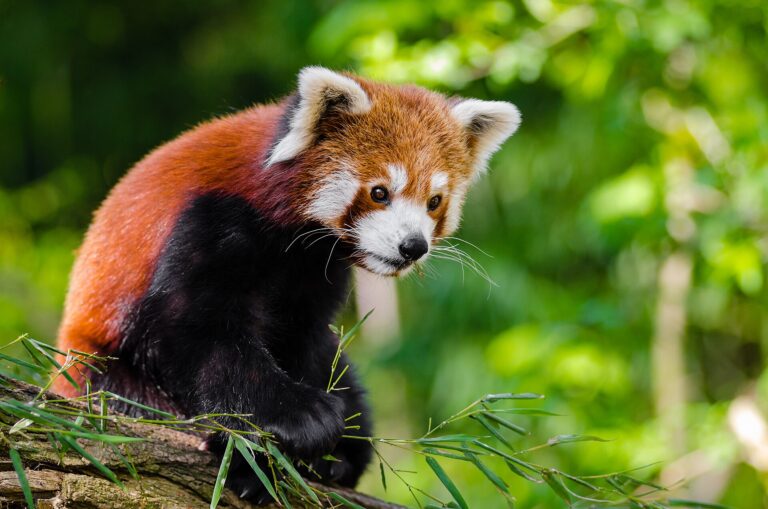
Yes. Red pandas share much of the same temperate forest belt, and Chengdu Research Base keeps a substantial captive red panda group. The red panda enclosures usually sit close to the giant panda areas, so they come as a bundle on a visit.
Sources and further reading
- UNESCO World Heritage Centre: Sichuan Giant Panda Sanctuaries (site 1213)
- Chengdu Research Base of Giant Panda Breeding, panda.org.cn
- China Conservation and Research Center for the Giant Panda (CCRCGP)
- State Forestry Administration: fourth national giant panda survey, 2015
- IUCN Red List: Ailuropoda melanoleuca
This article is part of our giant panda guide, which links every species, evolution and zoo article on the site.
Updated 16 November 2026: updated the Chengdu base panda count to more than 270, from the base’s own website, and removed the store block.



Booked Chengdu Research Base for April based on this. Tip for other readers: get the early morning entry slot, they are way more active before about 10am, after that they just sleep.
Strong note on the ethical red flag at the top. The paid panda hug photo op is something a friend got sucked into and only later realised it is not where the money should be going. Worth flagging hard.
Did Bifengxia in 2017 right before they relocated the breeding stock back to Wolong. Quiet, cool, and you almost have the place to yourself compared to Chengdu base.
How does Shenshuping compare to the original Wolong centre? Trying to decide between them and I keep getting them confused.
Jordan, Shenshuping is the new (post-2008-earthquake) Wolong centre and is the one open to visitors. The original Wolong Hetaoping site is mostly research-only now. Go to Shenshuping unless you have specific research access lined up.
Worth noting the September-October window is amazing for both pandas and the Sichuan colours. Did Jiuzhaigou and Chengdu base in the same trip in October 2022, dream itinerary.